
Introduction
I have spent over 23 years in the trenches of real estate: flipping over 100 homes and navigating the brutal math of property value. I do not care about “cozy” or “sentimental.” I care about the bottom line. In 2026, the median monthly cost for assisted living has hit $6,313. That is $75,756 a year. If you are looking for emotional validation, call a therapist. If you want to know how to deploy $25,000 to save your net worth, keep reading. We are going to look at the physics of the house and the logic of the tax code to ensure you do not liquidate your primary asset to fund a facility’s profit margin.
Video Guide Overview
Affiliate Disclosure
To keep this technical analysis free, I include links to specific hardware. If you purchase through these links, HousingAfter60.com may earn a commission. We only recommend industrial-grade gear that meets my standards for durability and ROI.
The “Short” Answer
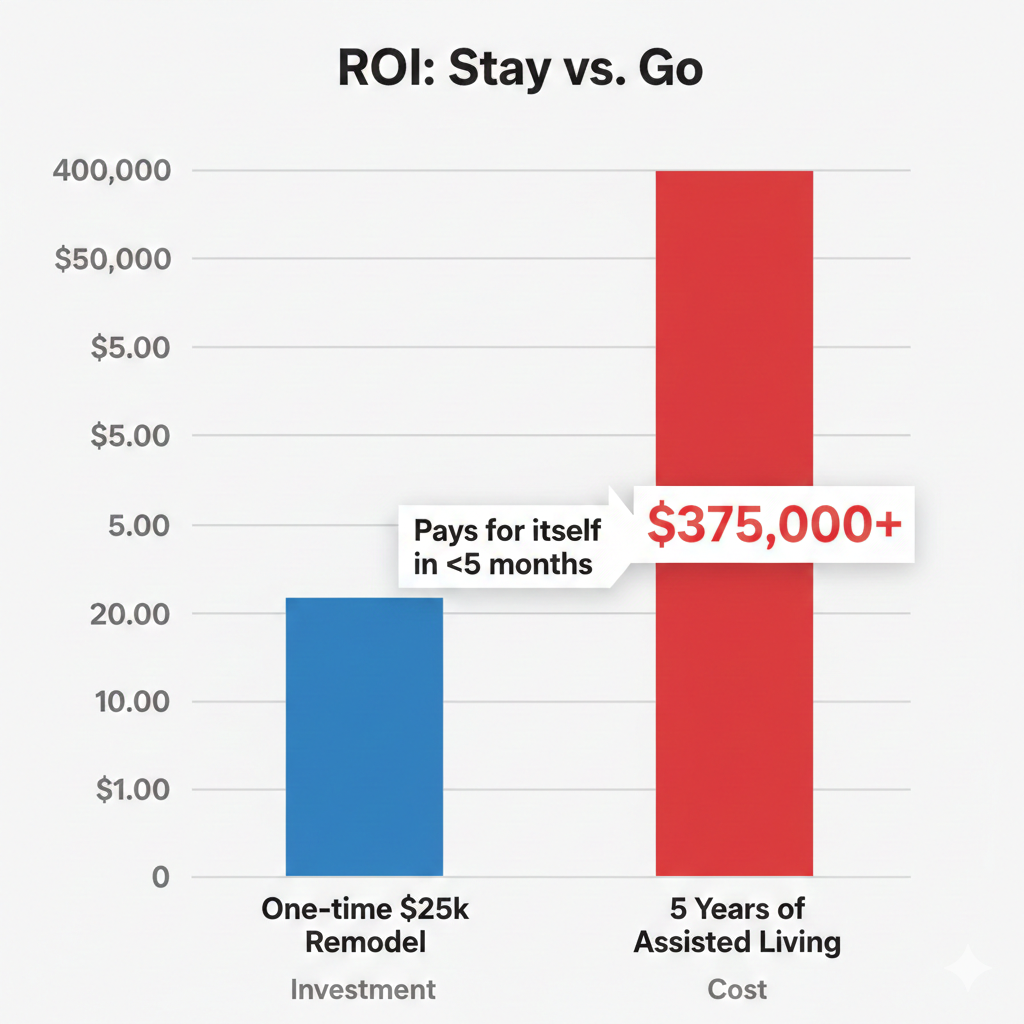
A $25,000 strategic safety remodel provides a 100% “break-even” ROI in less than four months compared to the cost of facility care. By focusing on high-liability areas like the bathroom and entryways, you eliminate the largest threat to your wealth: the forced liquidation of your home to pay for institutional living.
The Bathroom: Engineering the Wet Room
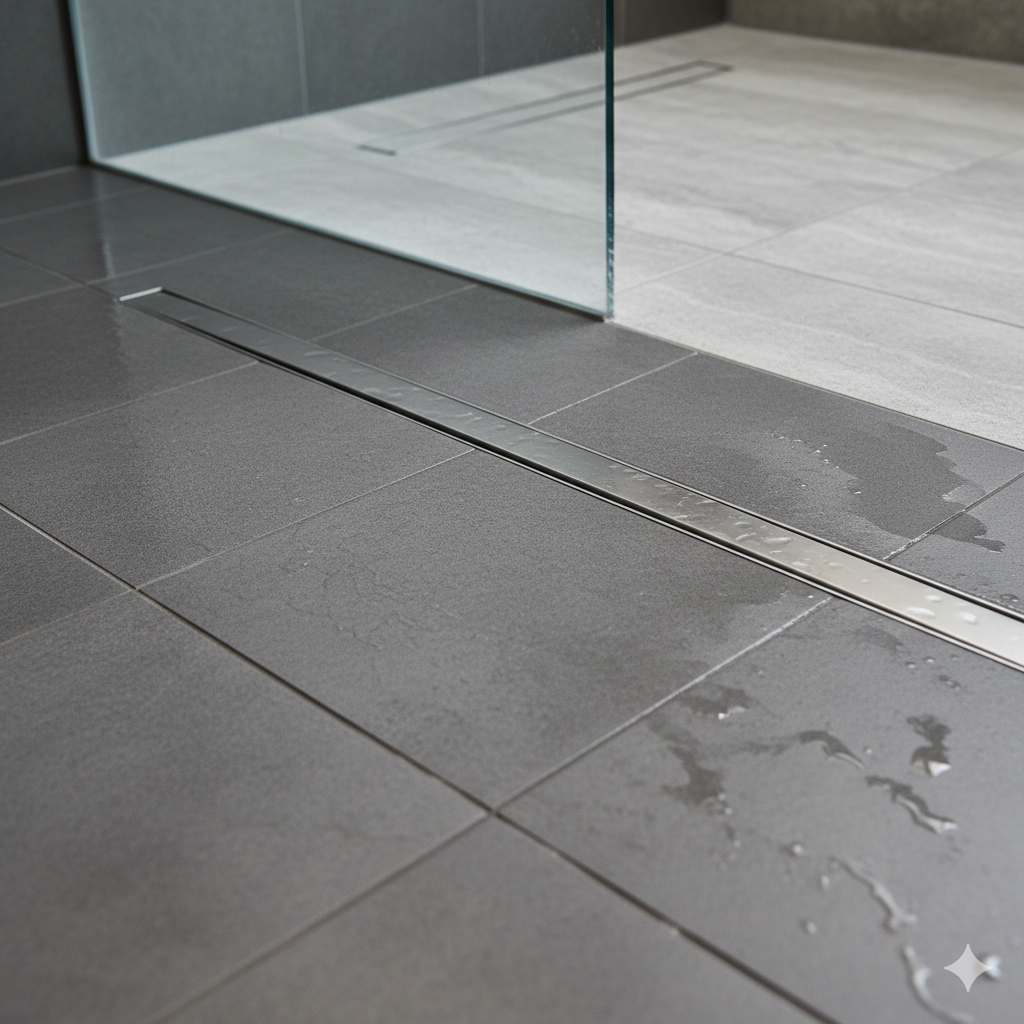
The bathroom is a high-friction environment where 80% of senior falls occur. I do not look at a bathroom as a place to relax; I look at it as a liability zone. In a safety remodel, to fix it, we move from “standard” to “industrial-accessible.” This means a curbless shower and reinforced wall structures. Most contractors will try to sell you a “walk-in tub.” Do not buy it. They are slow to drain, expensive to maintain, and a nightmare for future resale. You want a zero-entry wet room.
Technical Deep Dive: Structural Engineering for Grab Bars and Floors
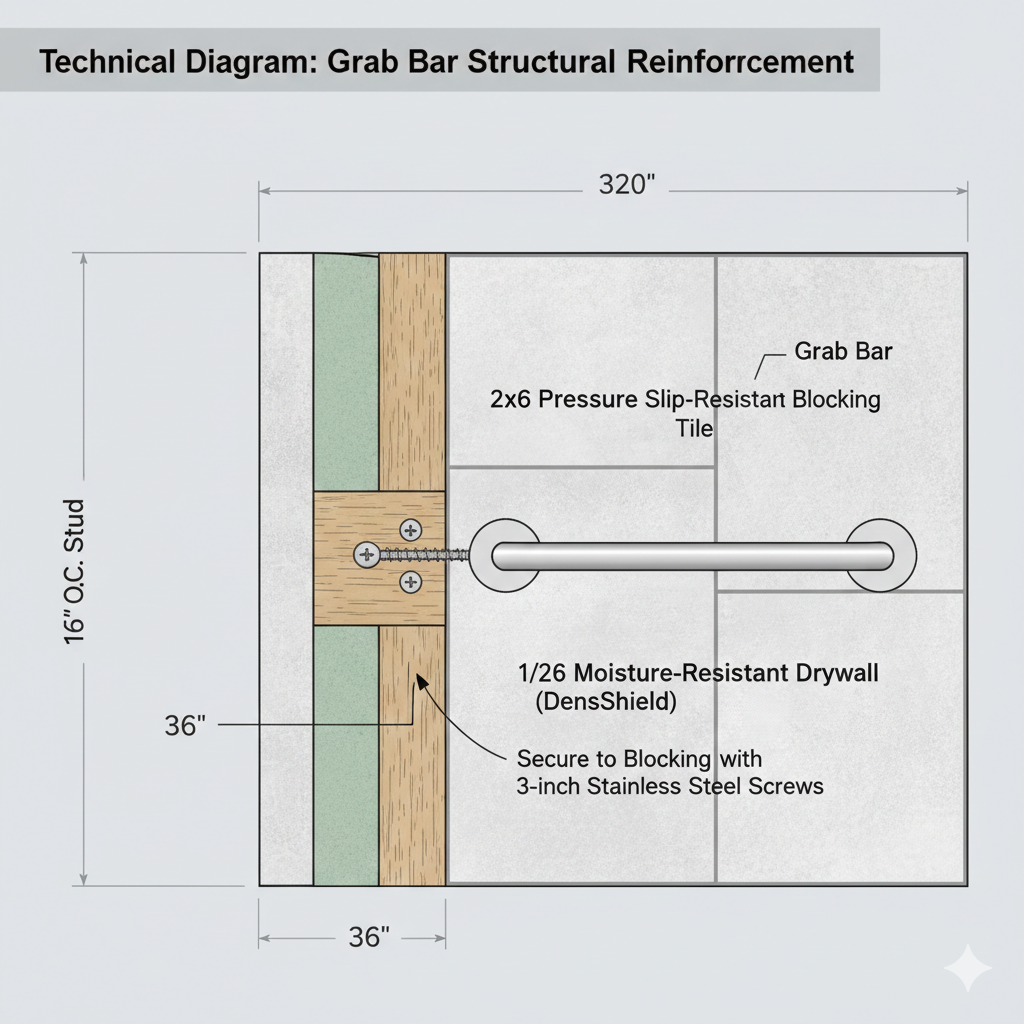
Most residential bathrooms are built with 1/2-inch moisture-resistant drywall. This is structurally insufficient for safety modifications. A 200-pound person falling exerts a dynamic load that can easily reach 500 pounds of force at the point of impact. Relying on “wing-it” anchors is a recipe for a lawsuit or a broken hip. When we remodel for a $25,000 budget, we strip the shower walls to the studs. We install horizontal 2×6 pressure-treated blocking between studs at 34 to 38 inches from the floor. This provides a structural substrate that allows grab bars to withstand a concentrated load of at least 250 pounds, exceeding 2026 residential building code requirements.
Furthermore, the flooring must meet specific Dynamic Coefficient of Friction (DCOF) ratings. For a wet room, you require a DCOF of at least 0.42. We specify porcelain tile with a Grade III slip-resistance rating. The drainage engineering is equally critical. To achieve a zero-threshold entry, the floor joists often must be “sistered” or shaved to create a 1/4-inch per foot slope toward a linear drain. This ensures that surface tension does not allow water to migrate into the dry zone of the bathroom, which would create a secondary slip hazard. If your contractor does not mention joist modification, they are not qualified to build a zero-entry shower.
Technical Deep Dive: MEP Cycles and Waterproofing Integrity
From a Mechanical, Electrical, and Plumbing (MEP) perspective, a $25,000 remodel must address the plumbing cycle. In older homes, the standard 1.5-inch drain pipe is insufficient for a linear drain system capable of handling high-flow showerheads. We often need to upsize to a 2-inch PVC drain to prevent “pooling,” which is a primary slip hazard. Electrically, we must ensure GFCIs are not just present but accessible. A senior should not have to reach behind a toilet to reset a circuit. We relocate switches and outlets to a 36-inch height. For waterproofing, we move away from traditional liners to topical membranes like Schluter-Kerdi. This creates a “monolithic” waterproof envelope. In my flipping experience, traditional liners fail at the curb. By eliminating the curb, you eliminate the failure point and the trip hazard simultaneously.
Access and Egress: The Geometry of the Ramp
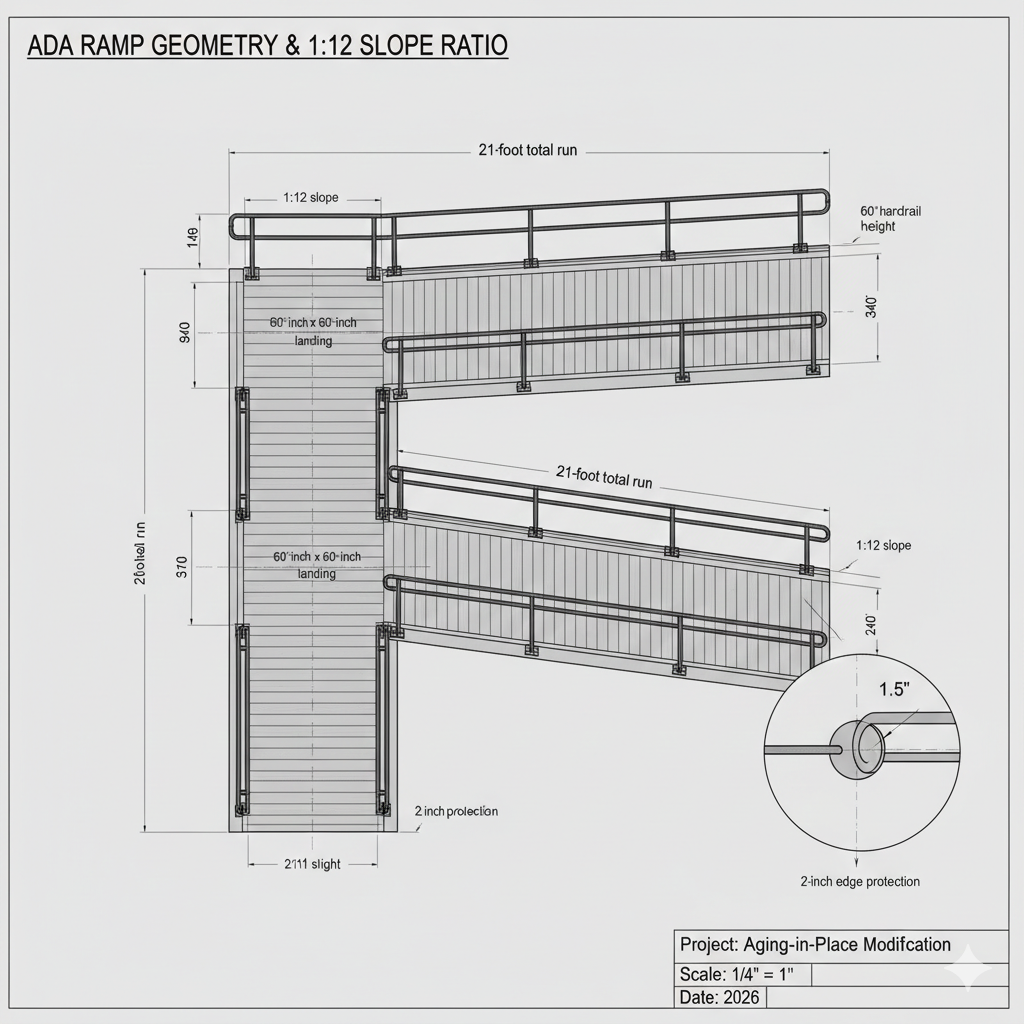
If you can’t get into your house, the house is a prison. Most residential steps are 7 inches high. For a standard 3-step entry, you are looking at a 21-inch rise. A temporary “fold-up” ramp is a liability. You need a permanent solution that integrates with the site’s topography. This is about managing the physics of a 300-pound combined weight of a user and a mobility device. In a safety remodel for a home, easy access is imperative.
Technical Deep Dive: 2026 Ramp Specs and Load Requirements
The standard 1:12 slope ratio is the bare minimum. For every 1 inch of vertical rise, you need 12 inches of horizontal run. For our 21-inch rise example, that is a 21-foot ramp. In 2026, we are seeing more stringent enforcement of landing requirements. You cannot have a continuous run of more than 30 feet without a 60-inch by 60-inch level landing. Why? Because manual wheelchair users experience muscle fatigue, and gravitational acceleration on a descent must be controlled. If your lot does not have the “real estate” for a 21-foot straight run, we engineer a switchback. This requires a landing with a minimum 5-foot turning radius to accommodate the 2026 standard for bariatric power chairs.
Structurally, the ramp must be rated for a 100 psf (pounds per square foot) live load. We use galvanized steel or composite decking over 4×4 pressure-treated posts set in concrete footings below the frost line. If the ramp rises more than 6 inches, handrails are mandatory on both sides. These rails must be continuous, 34 to 38 inches high, and have a “graspable” cross-section between 1.25 and 2 inches. This is not aesthetic: it’s about providing a “power grip” for someone with limited manual dexterity. We also look at “edge protection.” A 2-inch curb on the ramp edges prevents wheelchair wheels from slipping off the side, a critical safety feature often overlooked by non-specialist builders.
Technical Deep Dive: Doorway Widening and Load-Bearing Logic
Widening a doorway to the 36-inch standard is rarely a simple “trim job.” In most homes, interior doors are 30 or 32 inches. To gain those extra 4-6 inches, you are cutting into the wall framing. If the wall is load-bearing, you must replace the header. A standard 2×4 or 2×6 header will fail under the weight of a second story or roof load once the span is widened. We calculate the required header size using the 2026 International Residential Code (IRC) span tables. Typically, this involves an LVL (Laminated Veneer Lumber) header to minimize deflection. Deflection causes drywall cracking and door binding, which renders the accessibility modification useless. We also factor in “swing-clear” hinges. These hinges move the door entirely out of the opening, providing a full 36 inches of clearance without necessarily reframing the entire rough opening, saving thousands in labor costs while maintaining technical compliance.
The ROI of Avoiding “The Facility”
In 2026, the average monthly cost for assisted living has hit $6,313. Most people do not have that in cash flow: they end up selling the home to fund the care. This is the ultimate “unforced error” in real estate. By spending $25,000 now, you are effectively buying back your equity for 33 cents on the dollar in just the first year. The opportunity cost of not doing this is the total loss of your primary asset within 24-48 months of facility admission.
Technical Deep Dive: IRC Section 121 and Tax Logic
Under 2026 IRC Section 121, you can exclude up to $250,000 (single) or $500,000 (married) of gain from the sale of your primary residence. However, home modifications for medical purposes can often be treated differently. If a doctor “prescribes” these modifications, the cost may be deductible as a medical expense to the extent it exceeds 7.5% of your Adjusted Gross Income (AGI). More importantly, you are preserving the step-up in basis for your heirs, which is a massive net-worth protector under current 2026 tax laws. If you die in the home, (not literally inside the home, but while it is still your residence) your heirs inherit it at market value, wiping out capital gains tax. If you sell to move to a facility, that tax hits your estate hard. You are engineering a tax-efficient exit strategy. We also look at “qualified official extended duty” exceptions; if you are hospitalized or in a care home for health reasons, you can still meet the “use test” for Section 121 even if you are not physically in the house, provided you used it for at least 1 year in the last 5.
Technical Deep Dive: 10-Year Net Worth Trajectory
Let’s run the numbers on a 10-year horizon. Scenario A: You spend $25,000 on modifications in 2026. You stay in the home. Your home appreciates at a conservative 3% annually. On a $500,000 home, your asset is worth $671,958 in 2036. Scenario B: You do not modify, you fall, and you enter assisted living in 2027. You sell the home to pay the $75,000+ annual bill (adjusted for 2.5% inflation). By 2036, you have spent over $850,000 on care. Your net worth has decreased by $1.5 million when you factor in the lost appreciation of the real estate. The $25,000 investment isn’t just a safety measure; it’s a $1.5 million insurance policy on your estate.
2026 Cost Transparency Table
| Modification Item | Low-End (DIY/Basic) | High-End (Pro/Premium) | Charles’ Logic |
|---|---|---|---|
| Curbless Shower Conversion | $4,800 | $18,500 | Do not skimp on the pan; leaks cost $30k in mold remediation later. |
| Widening Doorways (to 36″) | $950 / door | $3,200 / door | Structural headers often need resizing; get a pro for load-bearing walls. |
| ADA Permanent Ramp | $3,200 | $10,500 | Composite decking avoids 2-year maintenance cycles. |
| Smart Lighting & Fall Sensors | $1,500 | $6,000 | Automated “pathway lighting” reduces 2 AM falls by 40%. |
| Grab Bar System (Housewide) | $600 | $2,800 | Bolt them into the framing with stainless hardware. |
Recommended Affiliate Products
| Product Category | Product Recommendation | Why It Matters |
|---|---|---|
| Structural Support | Moen Home Care 1.5″ Stainless Steel Grab Bars | Meets 250lb load spec and won’t rust in high humidity. |
| Entry Safety | EZ-Access PATHWAY 3G Modular Ramp | Aluminum construction means zero rot and quick install. |
| Tech Safety | Philips Hue Motion-Activated Smart Lighting Kit | Eliminates the “fumbling for the switch” fall risk. |
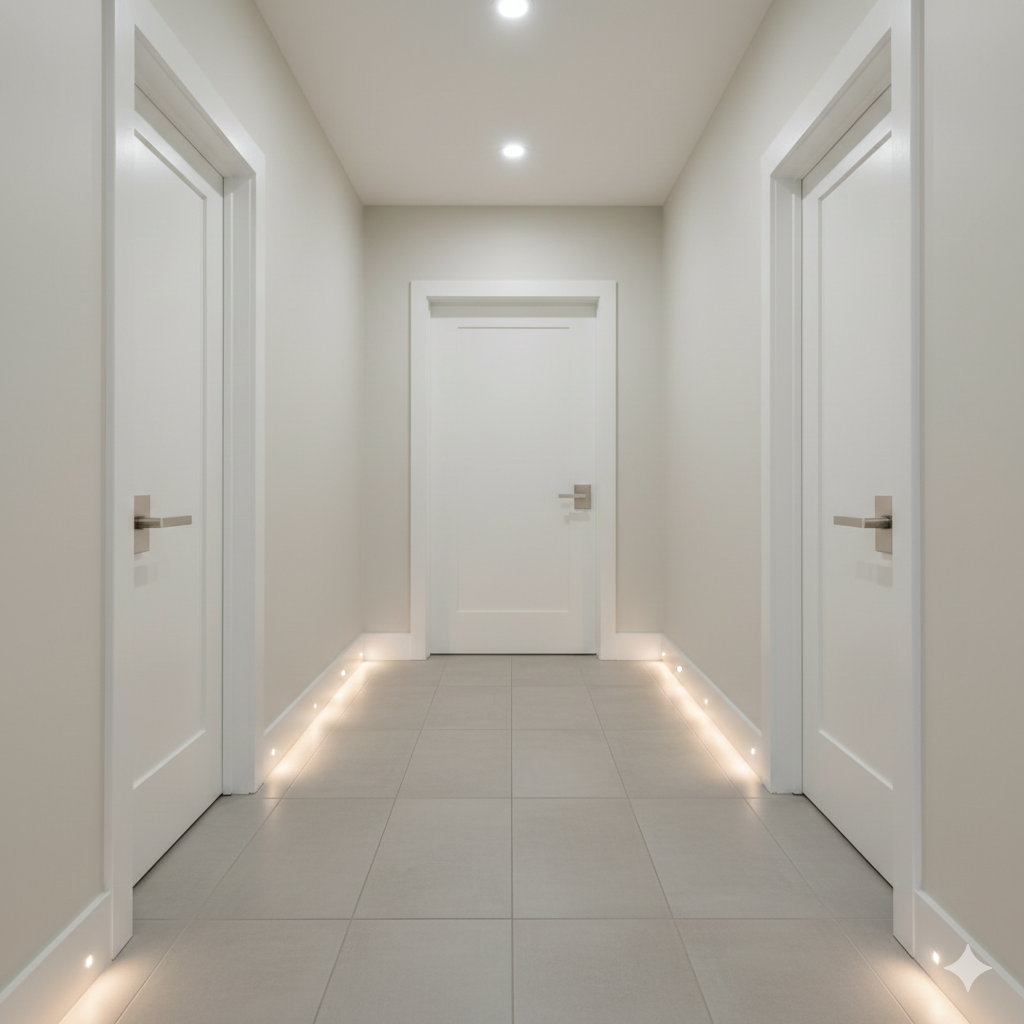
The $25,000 Safety Remodel Execution Checklist
- Audit the “Danger Zone”: Have a CAPS professional walk the house. Pay for the report; it’s cheaper than a broken hip.
- Prioritize the Primary Bath: If you only have $10k, spend it here. Curbless shower and comfort-height toilets are non-negotiable.
- Widening the Path: Ensure all main-floor doors provide a 32-inch clear width. Use “swing-clear” hinges for a cheap fix.
- Lighting Overhaul: Replace all 60W bulbs with 100W equivalent LEDs (3000K) to compensate for vision decline.
- Friction First: Rip out area rugs. They are decorative trip-wires. Replace with slip-resistant LVP or Grade III tile.
- Leverage Tech: Install smart locks and video doorbells to manage caregivers without having to move to the door.
Internal Resources
To deepen your understanding, read our guide on Maximizing Home Equity in Retirement. If you are debating a move, check out our analysis of Downsizing vs. Modifying: The Real Estate Math and our technical breakdown of 2026 Property Tax Exemptions for Seniors. (Coming Soon)
Summary
The $25,000 safety remodel is a financial hedge against the $850,000+ cost of a 10-year stay in a care facility. By reinforcing your structural environment and optimizing for the physics of aging, you protect your independence and your net worth. In real estate, the most expensive house is the one you are forced to leave because you didn’t treat it as the technical asset it is.
Bio: Charles O’Dell
Charles O’Dell is the owner of HousingAfter60.com and a veteran real estate investor with 23+ years of experience. Having flipped over 100 properties and managed hundreds of senior-focused transactions, he specializes in technical, logic-driven housing solutions that prioritize the bottom line over sentimentality.
Charles O’Dell has flipped 100+ properties and spent 23 years analyzing real estate math.