
Introduction
Summary: 2026 Manufactured Home Price Risks. High-end manufactured homes represent a 40 percent savings over stick-built construction in 2026. This article breaks down the technical chassis specs, 2026 IRC tax implications, and why this is the ultimate senior arbitrage play for your retirement. Note: Local labor rates for Manufactured Home Set-up changed in Jan 2026. See our full regional cost table below.
Video Guide Overview
Affiliate Disclosure
I believe in transparency. Some of the links below are affiliate links. If you buy a tool or product through these links, I get a small commission at no extra cost to you. I only recommend gear that passes my “first-principles” logic test. If it is junk, I do not list it.
The Short Answer
2026 Manufactured Home Price Risks. The manufactured home option is the most logical path for retirees in 2026 because it provides modern, energy-efficient housing at a 40 percent discount compared to site-built homes. This allows for massive equity extraction while maintaining a high standard of living in a precision-engineered environment.
The Real Estate Arbitrage of the Decade
I have spent 23 years watching people treat their homes like a family member: they get emotionally attached to a pile of sticks and bricks that is actively robbing them. If you are over 60, your primary residence should be an asset, not an anchor. Stick-built homes in 2026 are trading at a premium that makes zero sense when you look at the raw data. Why pay 40 percent more for a “traditional” home when the factory-built equivalent offers the same R-values and better quality control?
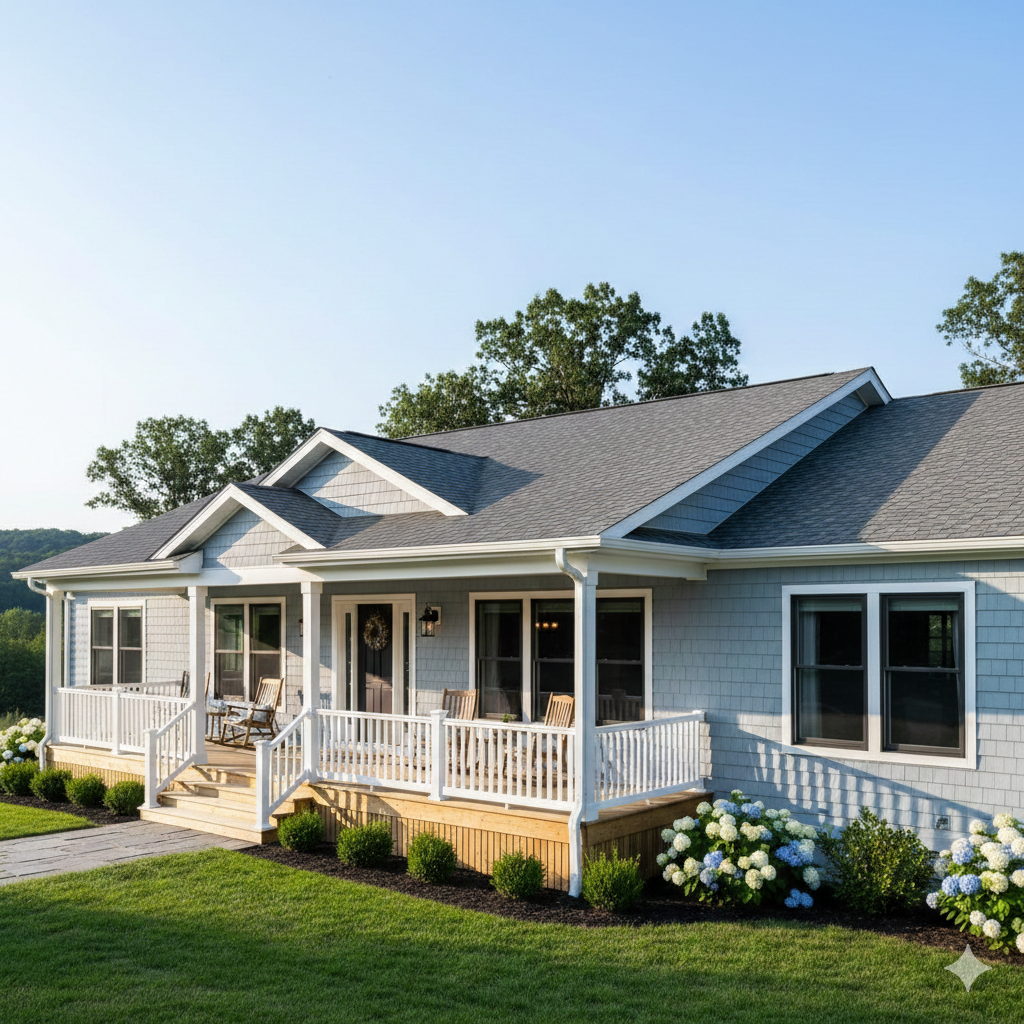
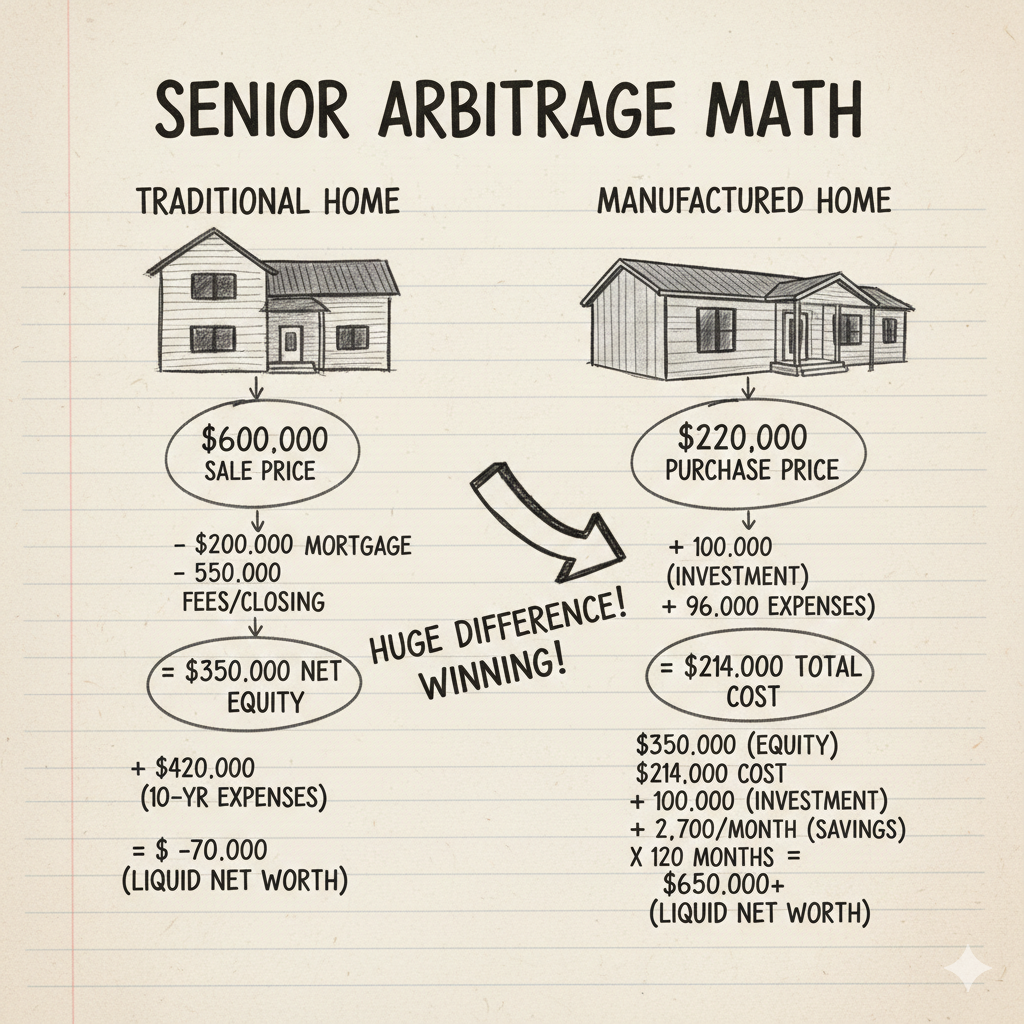
I call this the Senior Arbitrage Play. You sell the oversized, high-maintenance family home in a suburban sprawl. You take that $600,000 equity, buy a luxury manufactured home for $250,000 on a private lot or in a high-end land-lease community, and you stick $350,000 into a liquid, income-producing account. That is how you win the game. I am not talking about the “trailers” of the 1970s; I am talking about precision-engineered HUD homes that outperform site-built houses in every metric that matters to your wallet.
Most people are afraid of the word “manufactured” because they care about what their neighbors think. I do not care about your neighbors. I care about your net worth. In 2026, the delta between manufactured and stick-built pricing has reached an all-time high. If you want to keep working until you are 85 to pay for a roof you do not use, stop reading now. If you want the technical proof of why the factory floor is better than the job site, let’s look at the engineering.
Technical Deep Dive: Structural Engineering and HUD Code 2026
The primary difference between a manufactured home and a stick-built home is the federal HUD code versus local IRC codes. In 2026, the HUD standards for Wind Zone III and Thermal Zone 3 have been updated to require structural integrity that exceeds many local municipal codes in the Sunbelt. Let’s talk about the physics of the “Steel Chassis” and the “Thermal Envelope.”
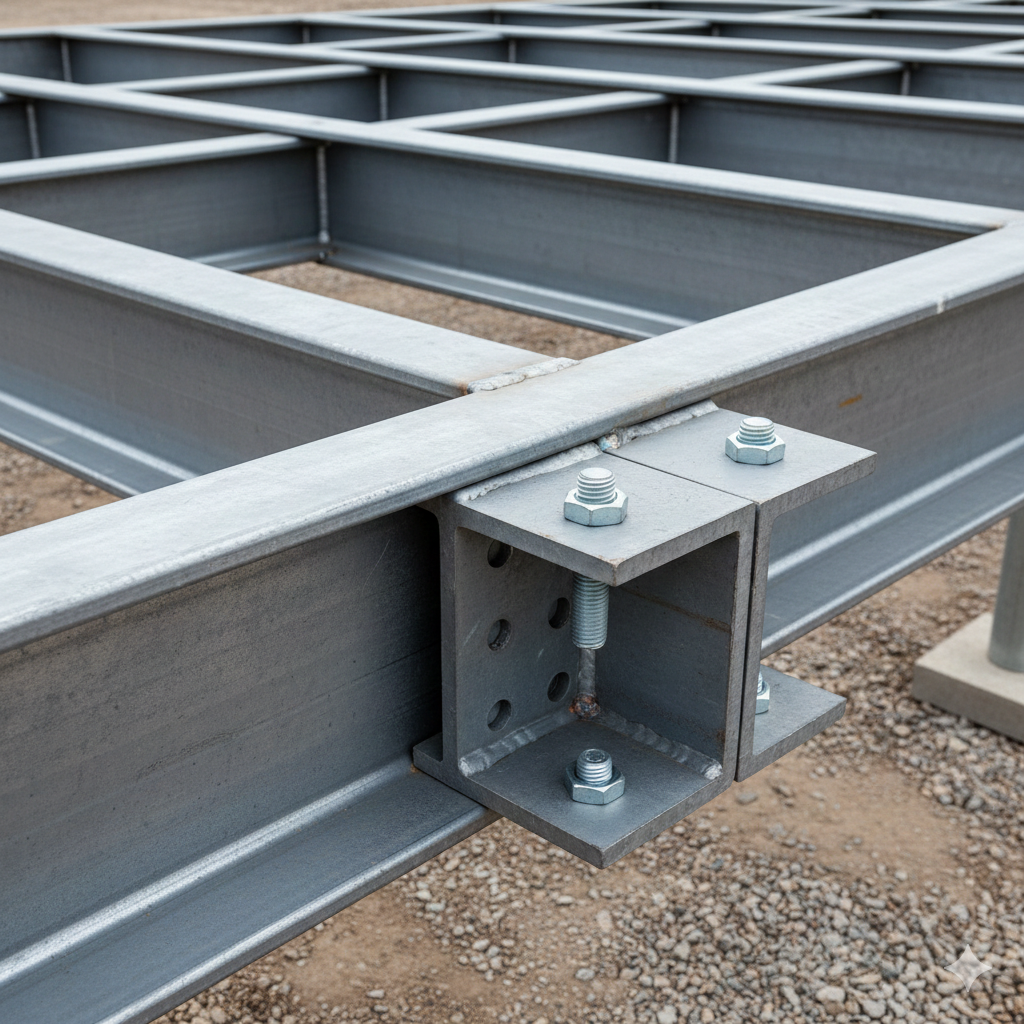
- The Integrated Steel Chassis: Every manufactured home is built on a permanent steel I-beam frame. These beams are typically 10 to 12 inches deep, depending on the span. In a stick-built home, you rely on the foundation to remain perfectly level over 50 years. In a manufactured home, the steel chassis provides a rigid “spine” that resists the settling and cracking common in site-built slabs. This chassis is reinforced with outriggers every 4 to 8 feet to support the exterior walls.
- Dynamic Load Testing: Stick-built homes are never tested for “transport loads.” A manufactured home is essentially a house that must survive a 60-mile-per-hour earthquake for several hundred miles as it is delivered. This requires structural glue-and-screw techniques that create a much more rigid box than a standard carpenter can achieve in the rain on a Friday afternoon.
- R-Value and Thermal Performance: In 2026, high-end builds utilize “blown-in” fiberglass or cellulose with R-21 in the walls and R-38 in the ceilings as a baseline. Because these homes are built in a controlled environment, there is no moisture trapped in the wall cavities during construction. This prevents the “mold-bloom” issues often seen in site-built homes where the framing is exposed to rain for months.
- MEP (Mechanical, Electrical, Plumbing) Cycles: The plumbing in a modern manufactured home is almost exclusively PEX (cross-linked polyethylene). This is superior to copper or CPVC because it expands during a freeze without bursting. The electrical systems are wired in a harness system that is tested at a central station before the walls are even closed. The reliability of a factory-tested circuit is statistically higher than a field-wired circuit.
Technical Deep Dive: 2026 Tax Logic and IRC Section 121
2026 Manufactured Home Price Risks. When you sell your primary residence to move into a manufactured home, you are engaging in a tax-advantaged liquidation. Under IRC Section 121, you can exclude up to $250,000 (single) or $500,000 (married filing jointly) of gain from the sale of your home. But the real 2026 magic is in how you title the new manufactured home.
- Real Property vs. Chattel: If you place your manufactured home on a permanent foundation on land you own, it is typically titled as “Real Property.” This makes it eligible for standard 30-year fixed-rate financing and the same tax benefits as any other house. In 2026, the interest on these loans remains deductible under current limits.
- Personal Property (Chattel): If you place the home in a land-lease community, it is often titled as “Personal Property” (like a car or a boat). While the interest might still be deductible if it is your primary residence, you avoid the high property taxes associated with land ownership. In states like Florida or Texas, this can save you $5,000 to $10,000 per year in carrying costs.
- Step-Up in Basis Rules: In 2026, there is ongoing debate about the “step-up in basis” at death. By downsizing into a lower-cost manufactured asset, you are effectively “locking in” your capital gains exclusion now. This de-risks your estate from future tax law changes that might target high-value real estate holdings.
- Depreciation Logic: If you use part of your manufactured home for a home office, the depreciation schedule is identical to a stick-built home. However, because the “improvement” (the house) is a higher percentage of the total value than the land, your depreciation “shield” can actually be more effective relative to your total investment.
2026 Cost Transparency: Manufactured vs. Stick-Built
| Expense Category | Manufactured (HUD) – 2026 | Stick-Built (IRC) – 2026 |
|---|---|---|
| Materials Cost (per sq. ft.) | $65 – $95 | $140 – $210 |
| Labor Cost (per sq. ft.) | $25 – $35 (Factory) | $90 – $150 (Site) |
| Permitting & Fees | $2,500 – $5,000 | $15,000 – $40,000 |
| Site Prep & Foundation | $12,000 – $25,000 | $45,000 – $80,000 |
| Total Estimated Cost (1,800 sq ft) | $195,000 – $265,000 | $460,000 – $720,000 |
Affiliate Product Comparison: Modern Home Maintenance
| Product Name | Use Case | Why It Wins in 2026 |
|---|---|---|
| Titan Laser Level Pro | Checking foundation settling | Self-leveling logic prevents pier errors. |
| SmartSump 3000 | Crawl space moisture control | WiFi alerts if humidity exceeds 55%. |
| Eco-Flow Whole Home Battery | Off-grid/Backup Power | Perfect for remote manufactured lots. |
The “Mobile Home” Stigma is Dead
If you tell your kids you are moving into a “mobile home,” they might picture a rusty unit in a dirt lot. That is because they are stuck in the past. In 2026, the “tiny home” movement has evolved into the “luxury manufactured” movement. I have seen units with quartz countertops, 9-foot ceilings, and spa-like master baths that would put a Custom Build in the Hamptons to shame. The difference? These were built in a factory where it doesn’t rain, the workers have all their tools within ten feet, and the quality control is managed by computerized sensors.
I recently walked a site where a client was installing a triple-wide unit. We did the math together. He sold his “prestige” home for $850,000. He bought a 2,400-square-foot manufactured home with every upgrade imaginable for $310,000. He spent $100,000 on a prime lot overlooking a lake. He had $440,000 left over. That $440,000, at a conservative 5 percent yield, gives him $22,000 a year in “fun money” just for existing. His neighbors in the stick-built houses across the lake are still working 50 hours a week to pay their property taxes. Who is the smart one in that scenario? High-End Living for 40% Less.
Technical Deep Dive: ROI Calculations and 10-Year Trajectories
Let’s look at the opportunity cost. If you stay in a stick-built home valued at $600,000 with a $200,000 mortgage at 6 percent, your monthly PITI (Principal, Interest, Taxes, Insurance) is likely around $3,500. Over 10 years, you will pay $420,000 in carrying costs. Your home might appreciate to $800,000, but you have “lost” $420,000 in cash flow.
- Scenario A (Status Quo): 10-year net worth gain of $200,000 (appreciation) minus $420,000 (expenses) = Net loss of $220,000 in liquid potential.
- Scenario B (The Arbitrage): Sell for $600k, net $350k after debt and fees. Buy a manufactured home for $250k cash. Monthly carrying costs (taxes/insurance/lot) drop to $800. 10-year total cost: $96,000.
- Compound Interest: Take the $100k remaining from the sale and the $2,700 monthly savings. Invest this at 7 percent. In 10 years, that grows to roughly $650,000.
- The Delta: By year 10, the “Manufactured Home” investor has a paid-off home and $650,000 in the bank. The “Stick-Built” homeowner has a home and a smaller bank account. The manufactured home might not appreciate as fast, but the liquid net worth of the owner is vastly superior.
This is first-principles logic. You do not live in your appreciation; you live in your cash flow. In 2026, cash flow is king.
Zoning and Regulatory Hurdles: The 2026 Landscape
2026 Manufactured Home Price Risks. You cannot just drop a house anywhere. In 2026, many “NIMBY” (Not In My Backyard) counties have tightened restrictions. However, the federal government has pushed back. New HUD-code preemption laws prevent local municipalities from banning manufactured homes solely based on their construction type. This has opened up thousands of prime acres that were previously off-limits.
When you are looking for land, you must verify the “Land Use” designation. You want “Unrestricted” or “Residential – Manufactured Allowed.” Do not take a realtor’s word for it. Go to the county planning office and ask for the specific zoning ordinance. If they tell you “no,” ask for the specific section of the code that prohibits HUD-standard housing. Often, they are citing outdated rules that were overturned in the 2025 federal housing updates.
Technical Deep Dive: Site Prep and MEP Integration
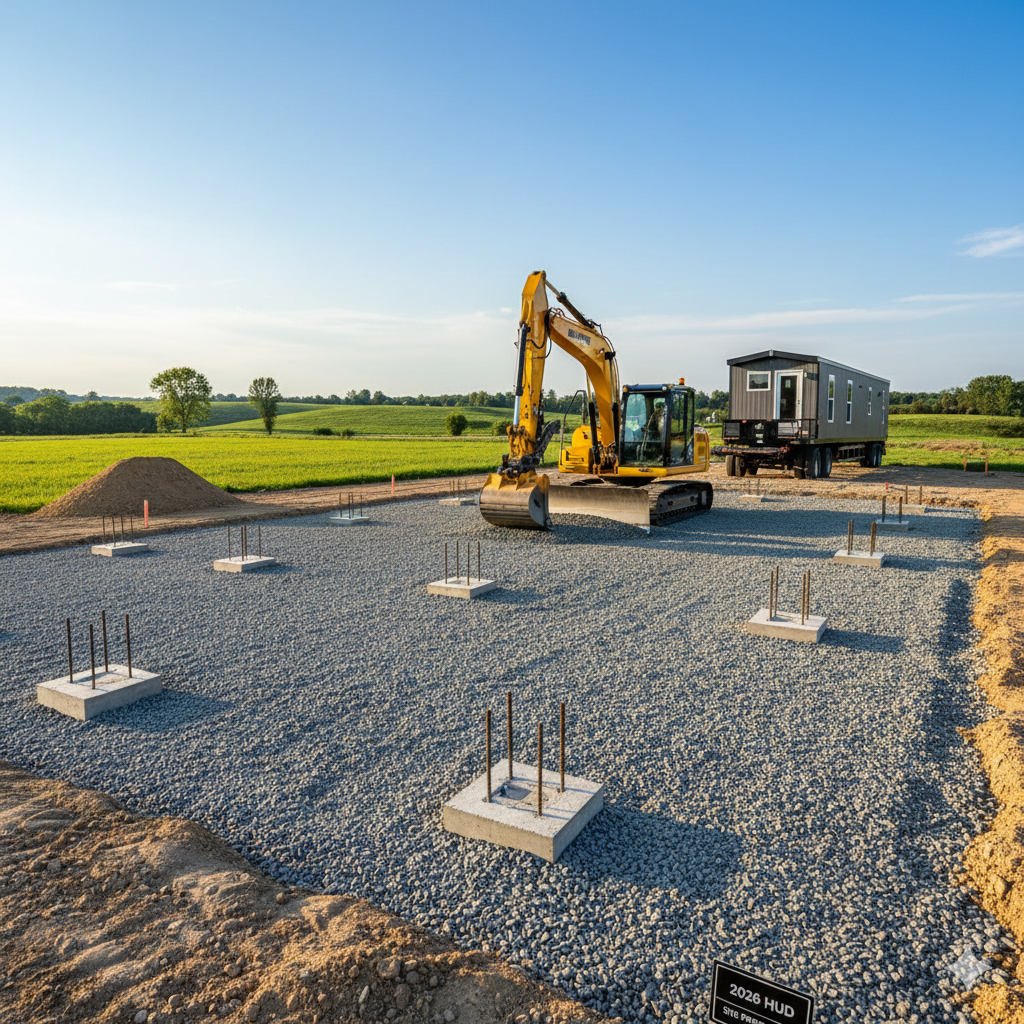
The “set” of a manufactured home is where 90 percent of the technical failures occur. If you do not get the foundation right, the house will groan, the doors will stick, and the marriage will suffer. Here is the engineering reality of a 2026 set-up.
- Vapor Barriers: 2026 standards require a 6-mil black polyethylene vapor barrier over the entire ground surface under the home. This prevents ground moisture from rising and rotting your floor joists. If your installer skips this, fire them.
- ABS Pier Systems: Gone are the days of stackable concrete blocks that crumble. Modern sets use ABS (Acrylonitrile Butadiene Styrene) pads and heavy-duty steel piers. These are engineered to distribute the 30-to-40-ton weight of the home without sinking.
- Ground Anchors: Depending on your Wind Zone, you will need auger-style ground anchors or “bolt-to-concrete” anchors. These must be tensioned to specific foot-pounds to ensure the house doesn’t move during a high-wind event. In 2026, digital tension gauges are the standard for professional installers.
- Marriage Line Sealing: This is the most critical MEP step. The two halves (or three) of the home meet at the “marriage line.” You must ensure the gasket seal is airtight. If it is not, your HVAC system will work double-time to heat the crawl space instead of your living room.
Actionable Checklist for the 2026 Buyer
- Verify the HUD Tag: Ensure the red metal plate is attached to the exterior of each section. Without this, you cannot get financing or insurance in 2026.
- Order a Soil Compaction Test: Before pouring footings or placing pads, spend the $500 for a soil test. If the ground is “expansive clay,” your home will be un-level within six months without specialized engineering.
- Check the 2026 Wind Zone Map: Do not buy a Zone I home for a Zone III area. It is illegal to install it, and it will be destroyed in a storm. Always “over-spec” your wind zone.
- Inspect the HVAC Ductwork: Ensure the ducts are metal or high-density flex-duct with R-8 insulation. Poor ductwork is the number one cause of high utility bills in manufactured homes.
- Negotiate the “Skirting”: Do not use cheap vinyl. In 2026, insulated “brick-look” or “stone-look” panels provide better R-value and significantly higher curb appeal.
- Review the Warranty: Most manufacturers offer a 1-year basic warranty. In 2026, I recommend negotiating a 5-year structural rider. The factory is efficient, but humans still make mistakes.
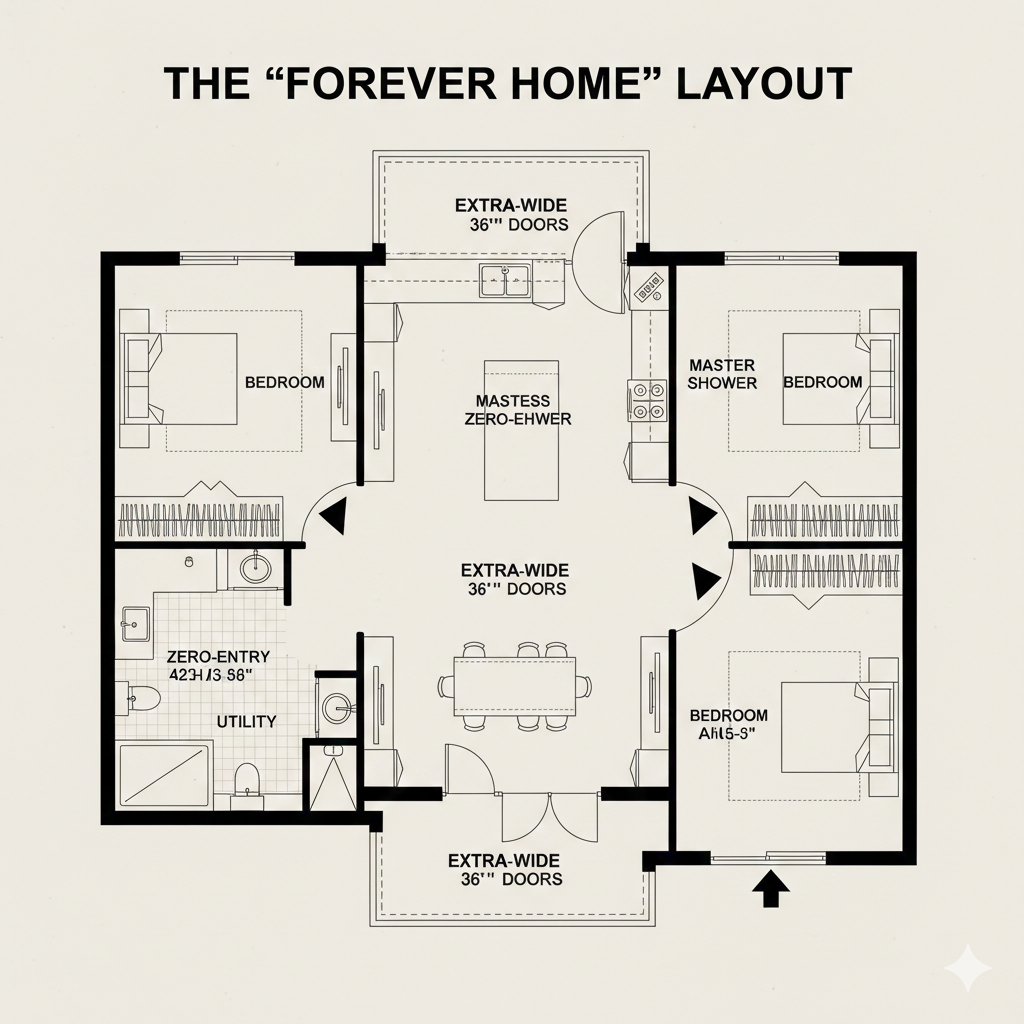
Technical Deep Dive: HVAC Logic and Air Exchange
2026 Manufactured Home Price Risks. Because modern manufactured homes are built so tightly to meet 2026 energy codes, they often suffer from “Stale Air Syndrome.” This isn’t just an annoyance; it is a structural risk. If moisture cannot escape, it will condense on the backside of your drywall.
- ERV/HRV Systems: Energy Recovery Ventilators (ERV) are now a near-requirement for high-end builds. These systems swap out indoor air for outdoor air while “stealing” the heat or coolness from the outgoing air. This maintains a 50 percent humidity level, which is the “sweet spot” for both human health and wood-frame longevity.
- Heat Pump Integration: In 2026, gas furnaces are being phased out in many jurisdictions. A high-efficiency mini-split or central heat pump with an HSPF2 rating of 9.0 or higher is the most logical choice for the manufactured home footprint.
- Duct Placement: Request “overhead” ducts instead of floor ducts. Floor ducts are magnets for dust and pet hair, and they are easily crushed during furniture moves. Overhead ducts provide more efficient cooling in the summer months.
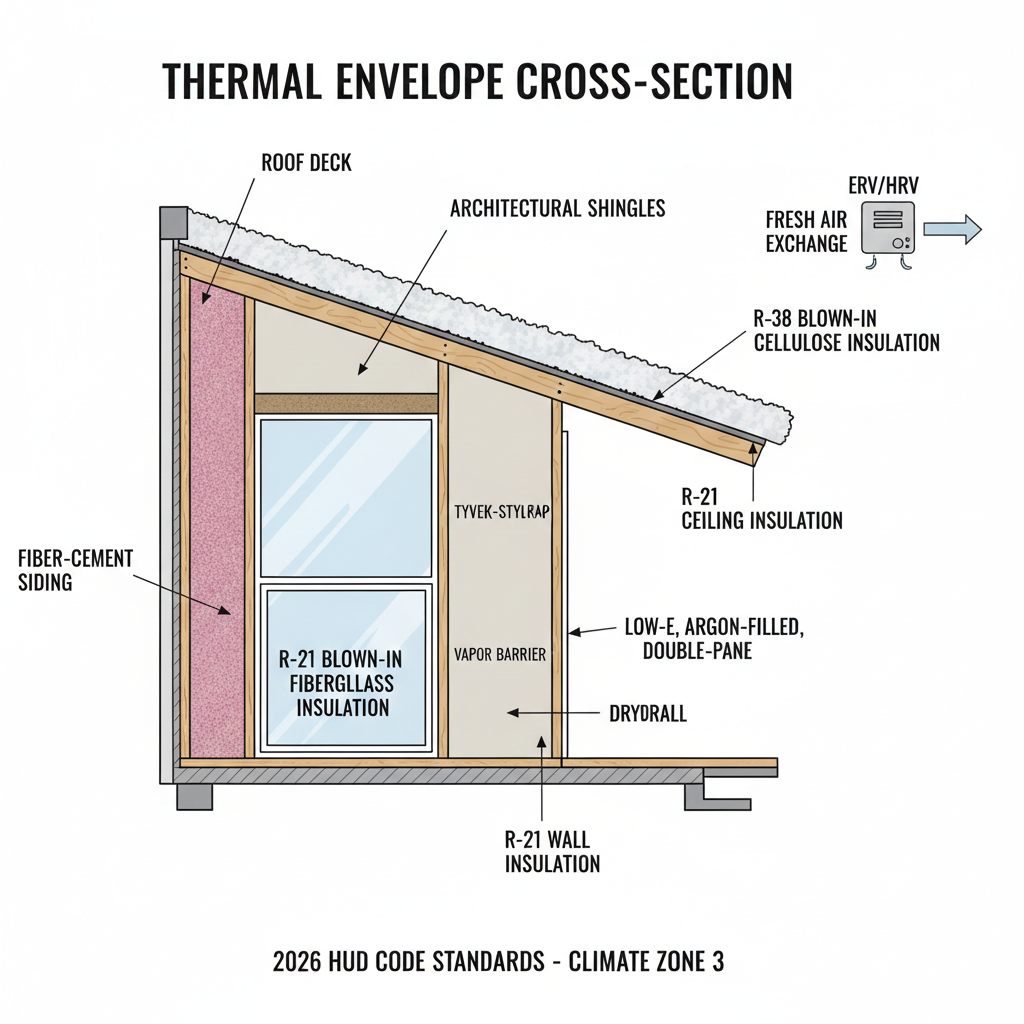
7-Point Engineering Risk Checklist (2026 HUD Standard)
Use this checklist to audit your installer’s work before you sign the final release. In 2026, many municipal inspectors are overwhelmed; as the owner, you must verify these structural “first principles” to protect your 40% arbitrage.
- [ ] The 1/2-Inch Drainage Slope: Verify the pad is graded so water falls at least 1/2 inch per foot for the first 10 feet away from the home. Standing water under a chassis is the #1 cause of floor rot and “musty home syndrome.”
- [ ] Marriage Line Gasket Integrity: On double-wides, ensure the factory-provided gasket is compressed between the two sections. If you can see daylight or feel a draft at the center-line floor or ceiling, your HVAC bills will be 30% higher than projected.
- [ ] Penetrometer Soil Verification: Do not allow piers to be set without a penetrometer test. 2026 HUD codes require footing sizes to match the soil’s “bearing capacity.” If you have 1000 PSF soil but use 1500 PSF footings, your home will settle unevenly.
- [ ] Free-Standing Addition Rule: Any porch, deck, or carport must be 100% free-standing. If a contractor nails a deck directly to the home’s rim joist without independent piers, your home will fail HUD certification for FHA/VA refinancing.
- [ ] ABS Pier Verticality: Inspect the support piers. They must be perfectly vertical. A pier that is even 2 degrees “out of plumb” significantly loses its load-bearing capacity and can kick out during a minor seismic event or heavy wind.
- [ ] 6-Mil Vapor Retarder: Confirm a black 6-mil polyethylene barrier is laid over 100% of the ground under the home, weighted down with gravel or bricks. This is not optional in 2026; it is the “lung” of your home’s undercarriage.
- [ ] Longitudinal Tie-Downs: Ensure your home has longitudinal anchors (parallel to the I-beams), not just lateral ones. In 2026 Wind Zone II and III areas, this is the difference between a home that stays on its piers and one that slides off during a storm.
Internal Resources
If you are still on the fence about the manufactured home path, read my breakdown of 2026 Site Prep Costs: Why Foundations Fail. If you are worried about the resale value, check out Appreciation Math: Manufactured vs. Stick-Built 10-Year Study. For those ready to pull the trigger, our guide on 2026 Financing: How to Get a 5.5% Rate on a HUD Build is a must-read. (ALL COMING SOON)
Summary
2026 Manufactured Home Price Risks. The year 2026 has brought a “perfect storm” for real estate. Stick-built prices are inflated by labor shortages and local regulatory bloat. Manufactured housing has bypassed these bottlenecks through factory automation and federal preemption. If you are over 60, the choice is clear: you can either be “house poor” in a traditional home, or you can be “cash rich” in a modern, precision-engineered manufactured home. The math does not lie. The engineering is superior. The arbitrage is yours for the taking. Stop listening to the “tradition” crowd and start looking at the bottom line.
Bio: Charles O’Dell
Charles O’Dell is the founder of HousingAfter60.com. With over 23 years of experience in the real estate sector, Charles has flipped more than 100 properties and facilitated hundreds of transactions for homeowners and investors. He specializes in “First-Principles” real estate investing, focusing on asset liquidity and cash-flow optimization for the 60+ demographic. He doesn’t believe in “dream homes”; he believes in smart assets.
Written by Charles O’Dell, a 23-year real estate veteran with 100+ flips and 400+ closed transactions.