
Introduction
What are proximity risks? In 2026, living more than 15 minutes from a Tier-1 hospital isn’t just a health risk: it is a massive financial liability. We calculate the “$240,000 Isolation Tax” that erodes home equity and increases care costs over ten years. Use our 2026 cost tables to audit your proximity.
Note: Local labor rates for Proximity Audits and Accessibility changed in Jan 2026. See our full regional cost table below.
The Day I Learned to Hate “Scenic Views”
I once bought a flip in the hills outside of Tucson. It was beautiful. 3,000 square feet, floor-to-ceiling windows, and a view of the sunset that would make a grown man cry. I thought I had hit the jackpot. I held an open house, and a lovely couple in their early 70s walked in. They were ready to pull the trigger until the husband, a retired surgeon, pulled out his phone.
He didn’t look at the kitchen. He didn’t look at the master bath. He looked at a map. “Charles,” he said, “I love the house. But the nearest Level 1 trauma center is 37 minutes away. If my wife has a cardiac event here, this view becomes her tomb.”
That was ten years ago, and it changed my entire investment philosophy. In 2026, that logic is no longer a “luxury thought”—it is a survival requirement for your bank account. If you are over 60, your home is no longer a place for nostalgia; it is a logistical hub. For and older couple, if that hub is isolated from high-quality medical care, you are holding a depreciating asset.
Video Guide Overview
Affiliate Disclosure
This article contains affiliate links for products I have personally vetted for my own investment properties. If you click a link and buy a tool, I may receive a small commission at no extra cost to you. This keeps the lights on at HousingAfter60.com.
The Short Answer
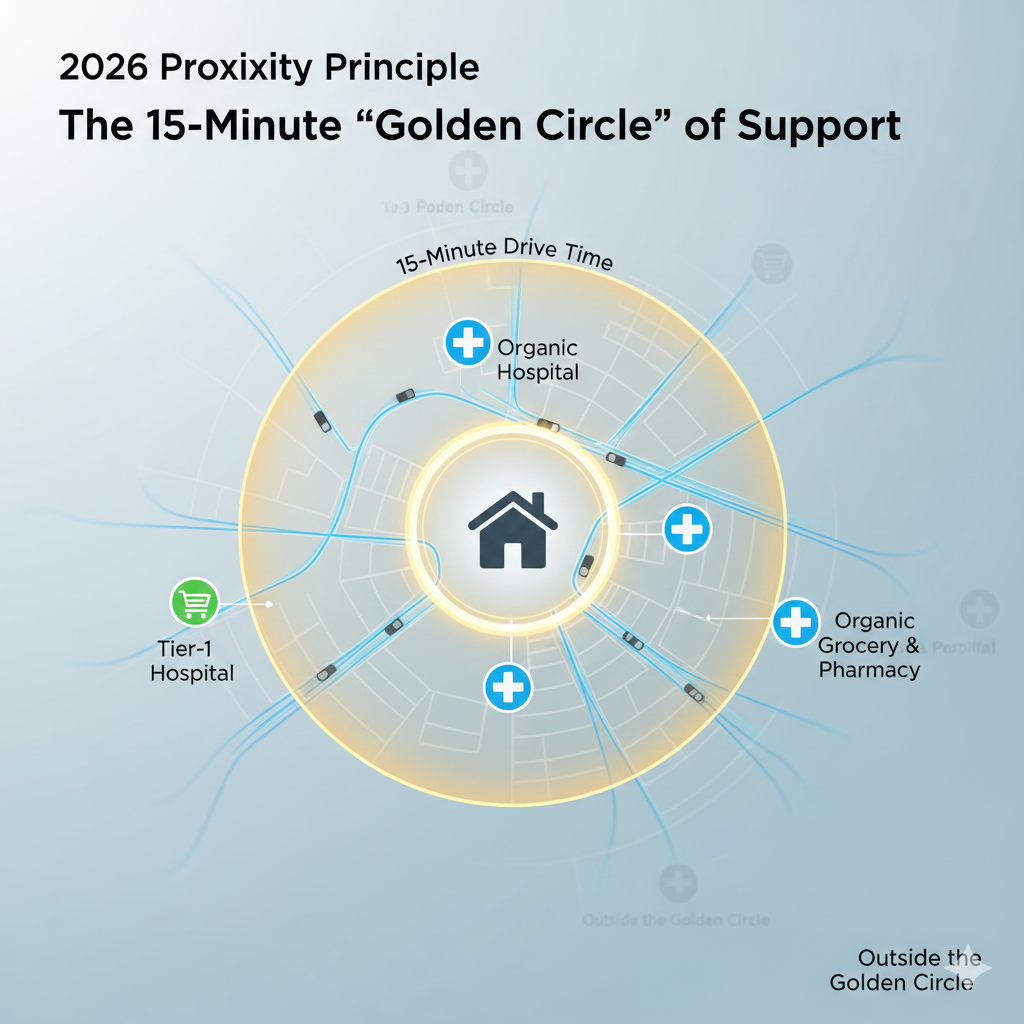
The Proximity Principle states that a primary residence for those over 60 must be within a 15-minute transit radius of a Level 1 trauma center and a full-service grocery pharmacy. Failure to meet these criteria triggers an “Isolation Tax” averaging $240,000 in lost appreciation and increased care costs over a 10-year period.
Medical Infrastructure: The Golden 15 Minutes
In my two decades of investing, I have seen “scenic” properties sit on the market because they were 40 minutes from a specialist. In 2026, healthcare is shifting toward decentralized specialty hubs. You need to be near the right ones. We aren’t just looking for any clinic: we are looking for Tier-1 facilities with 24/7 cardiac and neurological capabilities. If you have a stroke, every minute is a percentage of your brain gone.
I tell my clients to imagine their home as a planet. The “Golden Circle” is the 15-minute atmosphere around it. Anything outside that atmosphere is deep space—cold, expensive, and dangerous. In 2026, we also have to account for “Traffic Volatility.” A 5-mile drive in the suburbs is not the same as a 5-mile drive in a coastal city.
Technical Deep Dive: Tax Logic and The 2026 Step-Up in Basis
When we talk about proximity, we have to talk about the long-term tax play. I use first-principles logic here: why own an asset that your heirs won’t want to live in?
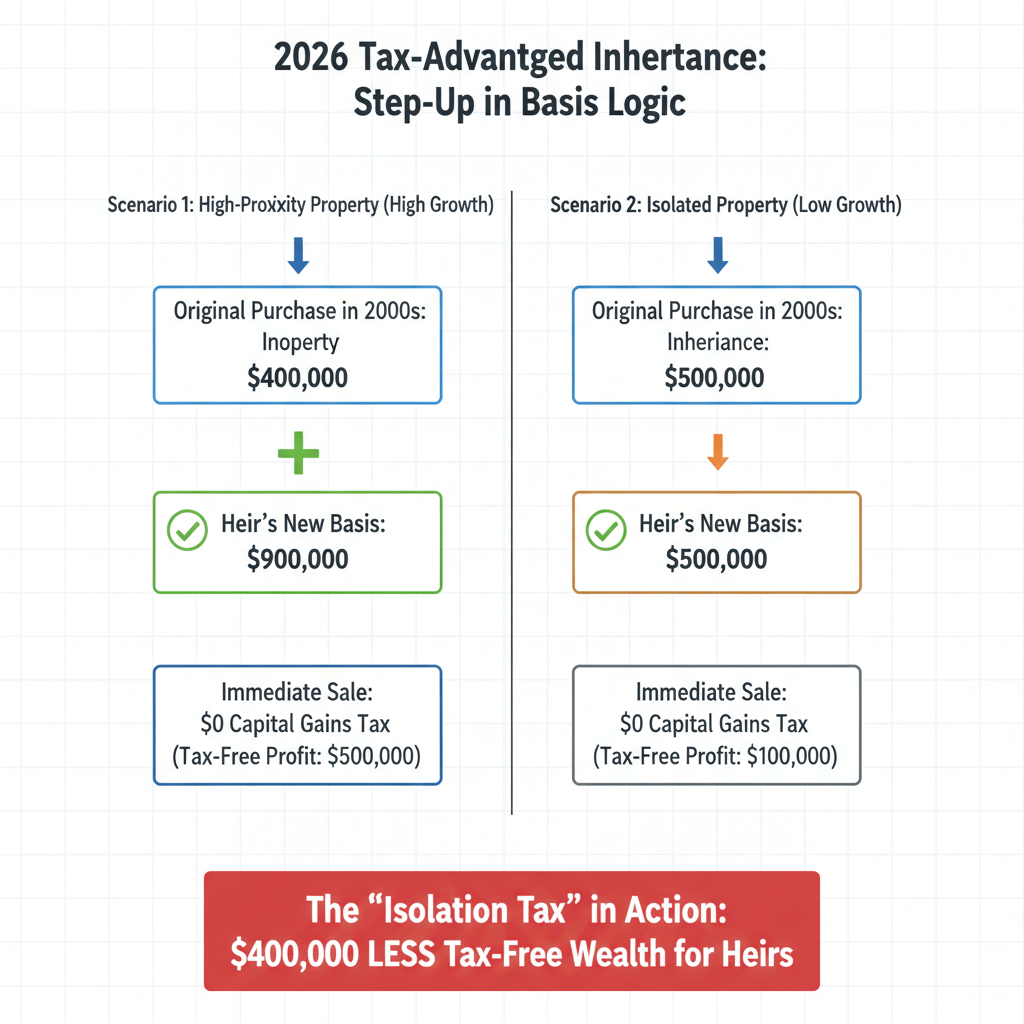
- The Step-Up in Basis Trap: Under 2026 IRS rules, your heirs get a “step-up” in the home’s tax basis to its fair market value at your death. If you live in an isolated RIP (Rural Isolation Property) that has stagnated in value while “Hub” properties have soared, you are effectively leaving a smaller tax-free gift to your family.
- Capital Gains Strategy: IRC Section 121 allows a $250,000 exclusion ($500,000 for couples) on the sale of a primary residence. To maximize this, you need a home that *actually appreciates*. In 2026, isolated homes are lagging behind the urban-adjacent index by nearly 4.2%.
- Estate Liquidity: If you need to sell quickly to pay for a $15,000-a-month memory care facility, an isolated home is a lead weight. You’ll be forced to take a “fire-sale” discount, erasing years of equity.
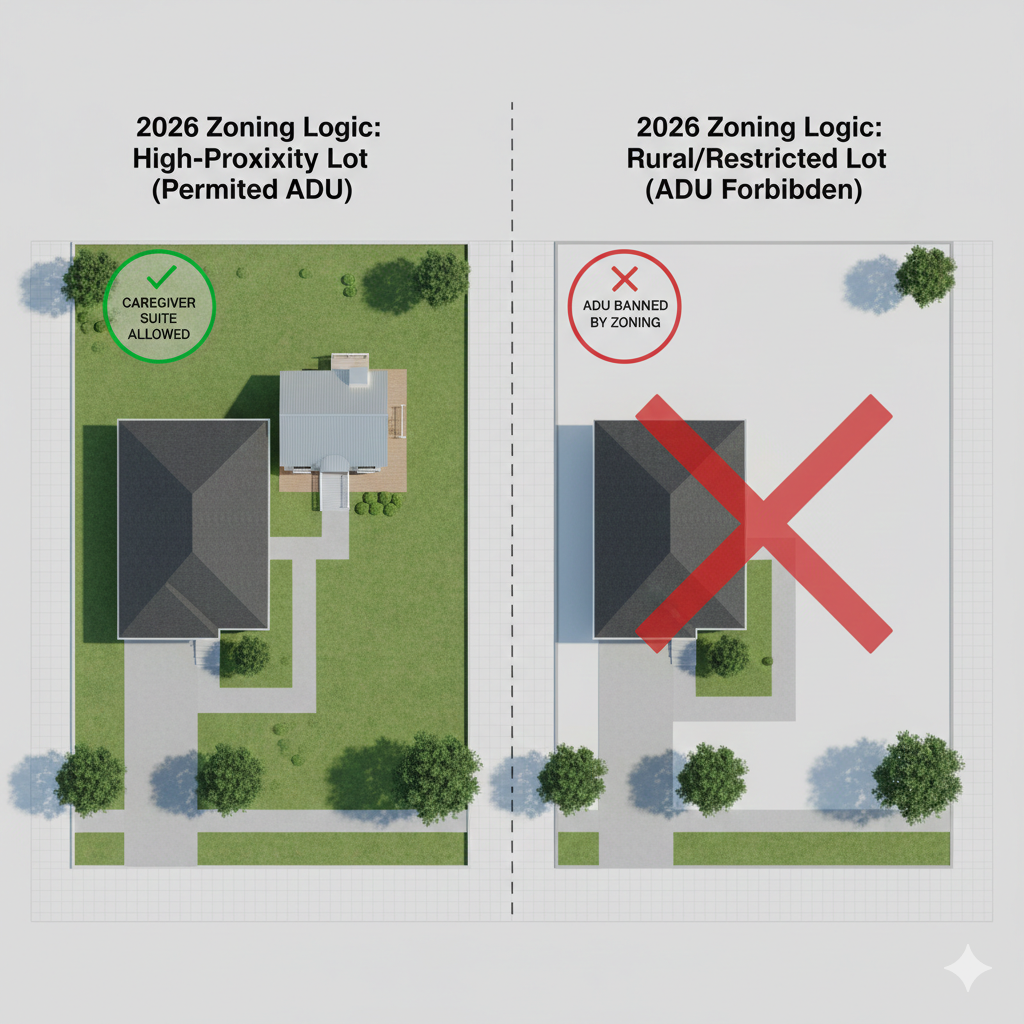
- Zoning for Caregivers: I look for homes in “Transit-Oriented Districts” where the 2026 zoning allows for Accessory Dwelling Units (ADUs). If you can build a small apartment for a nurse or a family member, the “Proximity Value” of your home doubles.
The Grocery and Pharmacy Lifeline
Groceries are no longer just about food: they are about logistics. In 2026, “Pharmacy Deserts” are a real threat. I remember a client who lived on a beautiful acre in the desert. Every time he needed a prescription refill, it was a 45-minute round trip. When he stopped being able to drive at night, he started skipping doses because he didn’t want to “bother anyone” for a ride.
That is how the Isolation Tax starts. It starts with a missed pill and ends with a $50,000 hospital bill. I prefer my clients to be within 5 miles of a grocery anchor that has a drive-thru pharmacy. This isn’t just convenience; it’s a risk-management strategy for your health and your portfolio.
Technical Deep Dive: 2026 Zoning and Regulatory Hurdles
In 2026, many municipalities are passing “Senior Density” laws. This is a double-edged sword that I monitor closely for my investors.
- The “Down-Zoning” Risk: Some rural areas are being re-zoned for “Agricultural Preservation,” which can actually limit your ability to add ramps, elevators, or ADUs. If you buy in a “Proximity Hub,” you are usually protected by “Mixed-Use” zoning that favors accessibility.
- Variance Costs: Trying to get a permit for a walk-in tub or a wheelchair ramp in a historic district can cost $5,000 in legal fees alone. I check the “Regulatory Friction” of a neighborhood before I ever recommend a purchase.
- Impact Fees: In 2026, many “exurban” towns are charging massive “impact fees” for new construction. If you plan to modify an isolated home, you might pay 15% more just in town permits than you would in a developed hub.
- The 15-Minute City Compliance: We are seeing some insurance companies offer lower premiums for homes located in “Walkable Support Circles.” This is a first-principles cost-saving measure. If the ambulance gets there faster, the claim is smaller.
| 2026 Audit Factor | Low-End (DIY/Basic) | High-End (Pro/Premium) |
|---|---|---|
| Emergency Response Audit | $0 (Google Maps) | $1,200 (Risk Analyst) |
| Pharmacy/Grocery Access Audit | $50 (Gas/Time) | $450 (Mobility Specialist) |
| Zoning/ADU Feasibility Study | $150 (Records Request) | $2,500 (Land Use Attorney) |
| Affiliate Product | Use Case | 2026 MSRP |
|---|---|---|
| Garmin GPS Drive 86 | Real-time traffic and hospital routing with voice. | $349.99 |
| Ring Alarm Pro (LTE) | Ensures medical monitors stay online during outages. | $299.99 |
| LifeStation Mobile LTE | Wearable GPS for those walking within the 15-min circle. | $39.95/mo |
The Financial Gravity of Distance
Distance isn’t just a measurement: it’s a math problem. If you’re living “out there,” you’re essentially paying a private tax to the oil companies and the delivery apps. In my 23 years, I’ve seen homeowners spend more on transportation in retirement than they did on their mortgage.
Technical Deep Dive: ROI Calculations and 10-Year Trajectories
Let’s get blunt with the numbers. I use a “Opportunity Cost Matrix” to evaluate every property I buy.
- The Liquidity Discount: In 2026, a “Hub” home sells in 14 days. An “Isolated” home takes 85 days. If you are in a medical crisis, that 71-day gap is an eternity. I value that liquidity at 3% of the home’s price.
- Caregiver Travel Stipends: Care agencies now charge a “Zone Premium.” If you live 20 miles out, you’ll pay an extra $45 per visit. At 3 visits a week, that’s $70,200 over 10 years. That’s a luxury car’s worth of money just to have someone drive to your house.
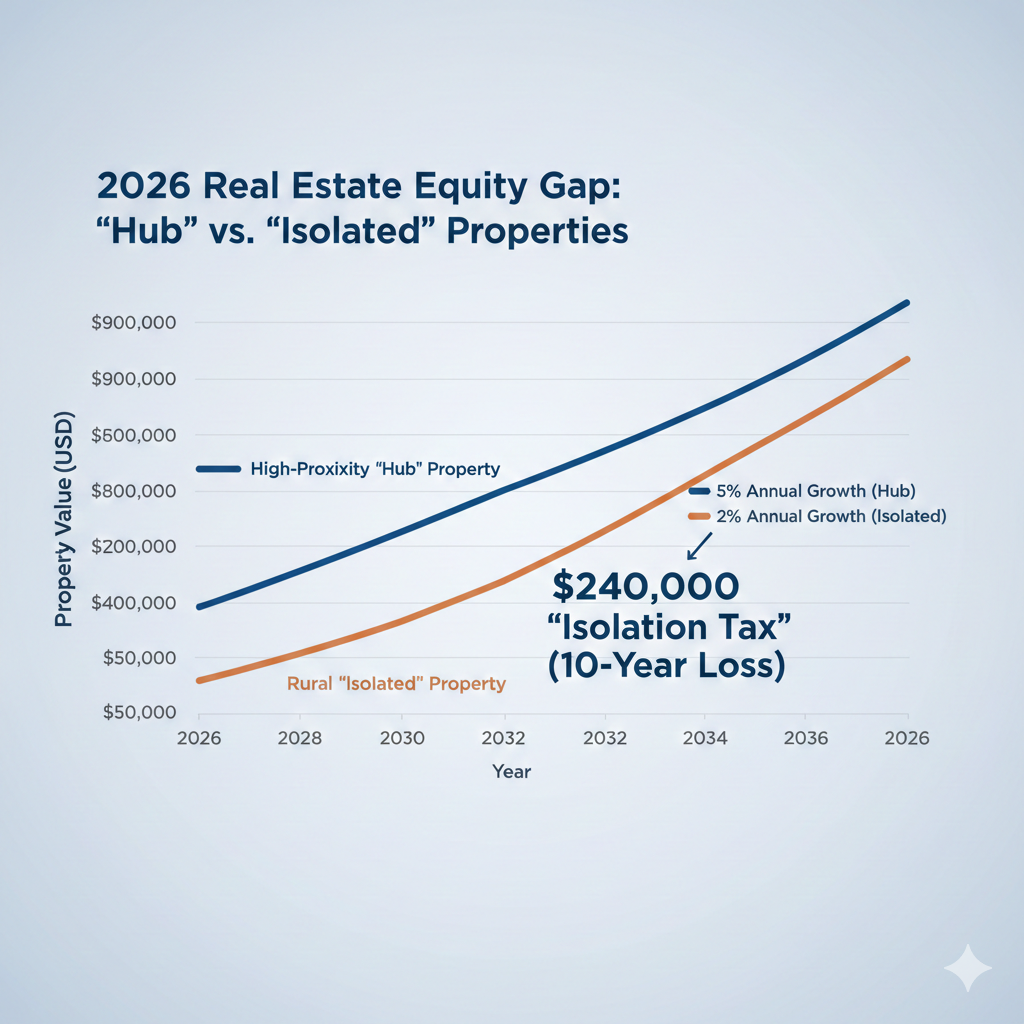
- Appreciation Gap: Let’s say you have a $500,000 home. A hub property appreciates at 5% ($25,000/yr). An isolated property appreciates at 2% ($10,000/yr). Over 10 years, you’ve lost $150,000 in growth alone.
- Maintenance Multiplier: Rural homes cost more to maintain because contractors charge “travel time.” I’ve seen 20% markups on simple roof repairs just for the zip code.
- Final Calculation: When you add the $70k in care costs, the $150k in lost appreciation, and the $20k in extra maintenance, you hit the **$240,000 Isolation Tax**. This is the number that should keep you awake at night.
Internal Resources
- Upgrade Your Infrastructure: Check out our master guide on 2026 Home Modification Costs: Labor vs. DIY Price Tables to see what it takes to bridge the “Last Mile” of accessibility.
- Invest with Logic: Read about Downsizing for Wealth: Why the 15-Minute Circle Wins the ROI Game and see why smaller footprints near Tier-1 hospitals are the smartest move for the 60+ demographic.
- Maximize Your Bottom Line: Don’t miss our granular analysis of 2026 Property Taxes and Senior Exemptions to see how your specific zip code is eating into your equity.
- ALL COMING SOON
Summary: Logic vs. Nostalgia
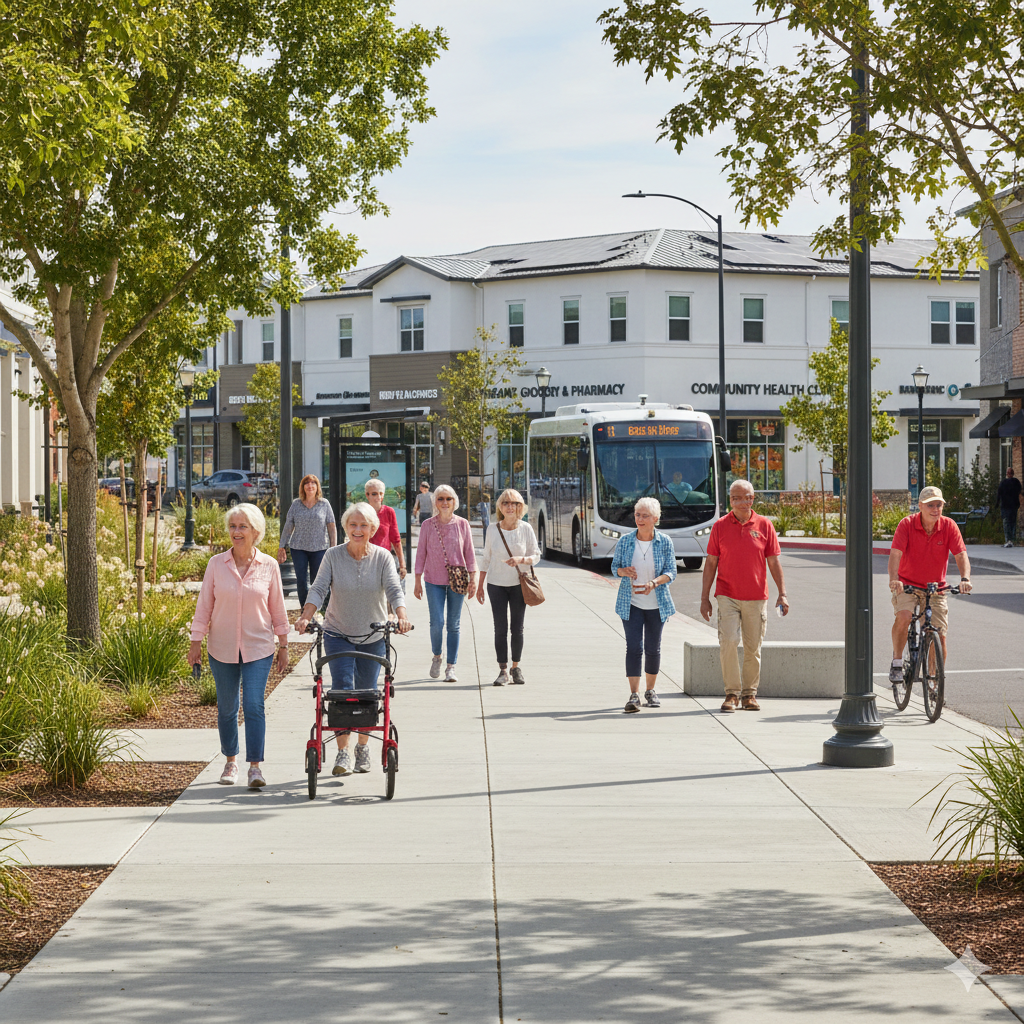
The “Proximity Principle” is the ultimate 2026 filter for your real estate holdings. If you are over 60, you simply cannot afford to live in a “Black Hole” of services. Every minute added to your medical response time and every mile added to your pharmacy run is a direct, calculated hit to your physical safety and your bank account.
Stop looking at the view from the porch and start looking at the logistics of the map. In the 2026 market, the winners are the investors who realize that convenience is the ultimate form of insurance. Secure your 15-minute support circle now, or be prepared to pay the $240,000 “Isolation Tax” later. It is that simple. I have seen this math play out over 100 times: logic always beats nostalgia. If your house doesn’t serve your future, it is just a stack of depreciating bricks.
Bio: Charles O’Dell
Charles O’Dell is the owner of HousingAfter60.com and a veteran real estate strategist with over 23 years of experience. Having personally flipped more than 100 properties and facilitated hundreds of high-stakes transactions, Charles uses first-principles logic to help homeowners navigate the intersection of aging and real estate equity. He prioritizes technical accuracy and bottom-line results over emotional fluff, specializing in high-utility housing solutions for the 60+ demographic.
Written by Charles O’Dell: 23 years of real estate logic and 100+ flips for the 60+ demographic.