
The Short Answer (As-Is or Renovate)
Executive Summary: Sell as-is or renovate? Deciding whether to fix up a home or sell it “As-Is” in 2026 depends entirely on your net proceeds, not the gross sale price. While renovations can boost the sticker price, labor shortages in 2026 have driven contractor fees up by 12% compared to last year, often eating any potential profit. For seniors, the “Minimal Prep” strategy usually yields the highest ROI by avoiding major structural debt.
Note: Local labor rates for home renovations change constantly. See our full regional cost table below.
Video Guide Overview
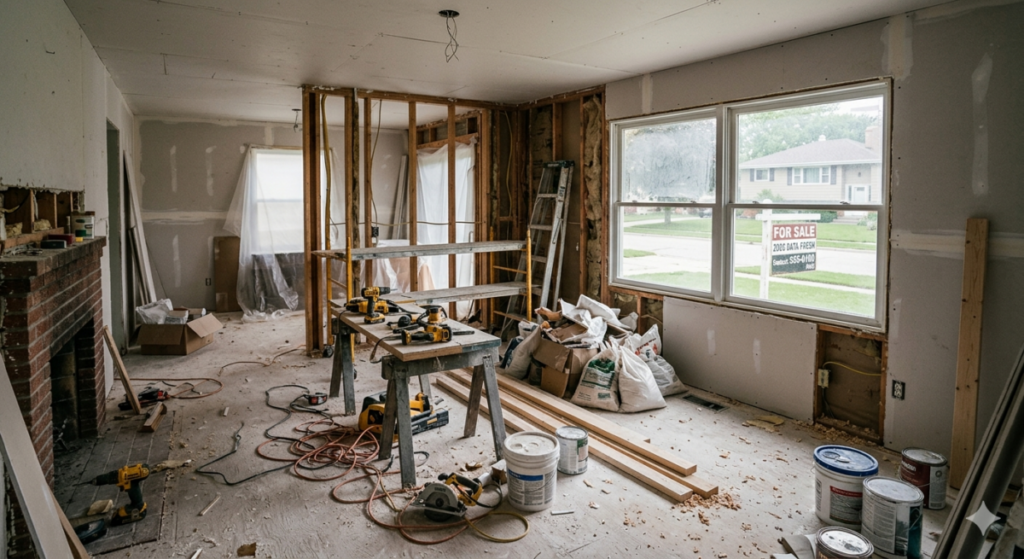
Affiliate Disclosure: To keep the lights on and the data fresh here at HousingAfter60.com, I want to be upfront: some of the links in this article are affiliate links. This means if you click through and make a purchase, I may receive a small commission at no extra cost to you. I only recommend tools, hardware, or tech that I have personally used on my 100+ property flips or that my vetted contractors swear by in 2026. My goal is to maximize your ROI, not just sell you a hammer you don’t need.
1. What This Decision Really Means (Start Here)
I have spent over two decades in the trenches of real estate: flipping houses, managing rentals, and helping homeowners over 60 navigate the often-terrifying prospect of selling their “forever” home. In 2026, the market isn’t what it used to be. You can’t just slap a coat of beige paint on a wall and expect a bidding war. You have to look at the hard math. Selling “As-Is” means exactly what it sounds like: you are handing over the keys, the leaky faucet, and the 1970s shag carpet to the next person without lifting a finger.
On the flip side, renovating before selling means you are entering the world of “Project Management.” You are hiring contractors, picking out tile, and hoping the market doesn’t crash while your kitchen is a pile of sawdust. For seniors, this isn’t just a financial choice; it is a health and stress choice. Do you want to spend your retirement chasing a plumber who forgot his wrench, or do you want to be at the golf course? My first-principles logic always points toward the path of least resistance unless the profit spread is massive.
2. The Core Question: What Is ROI?
ROI stands for Return on Investment. It is a fancy way of saying: “If I give you a dollar, how many dollars do you give me back?” In real estate, the formula is simple: (Sale Price – Renovation Cost – Original Value) / Renovation Cost. However, most people forget to subtract the “Stress Tax.” If you spend $50,000 to make $55,000, you didn’t really make $5,000. You made a few pennies an hour for the hundreds of hours of sleep you lost.
Technical Deep Dive: The Opportunity Cost of Capital in 2026
In the current 2026 financial climate, we must look at Opportunity Cost. If you take $100,000 out of a high-yield savings account or a conservative REIT to fund a bathroom remodel, you aren’t just spending that cash. You are losing the 5% to 6% interest that money would have earned while the contractor was “finding himself” on a three-week vacation. Over a six-month renovation period, that is thousands of dollars in lost passive income. Furthermore, we must consider the 2026 Step-Up in Basis rules if this property is part of an estate plan. If you renovate and the value spikes, but you pass away shortly after, the capital gains implications for your heirs change significantly based on the adjusted cost basis. I always tell my clients: don’t just look at the shiny new faucet; look at the bank statement you would have had if you stayed in bed instead. In a high-inflation 2026 environment, liquidity is king. Spending liquid cash on illiquid home equity is often a strategic error for those on a fixed income.
3. Selling “As-Is”: What It Really Looks Like
Selling as-is is the “Easy Button.” It is perfect for the homeowner who is tired of the maintenance and just wants to move to a condo in Florida. You don’t have to worry about the roof that’s seen better days or the furnace that sounds like a jet engine taking off. The downside? You are going to leave money on the table. Professional investors (like the ones I used to compete with) will look at your home and subtract the cost of every repair plus a 20% “risk premium.”
- Identify every major defect in the home so you can disclose them properly; honesty prevents lawsuits.
- Clear out all personal clutter and “treasures” to show the home’s bones.
- Research local “cash buyers” versus “retail buyers” to understand your price floor.
- Prepare for a shorter closing window; as-is buyers often want to move fast.
| Project Type | Low-End (DIY/2026) | High-End (Pro/2026) |
|---|---|---|
| Interior Painting (3BR) | $1,200 | $5,500 |
| Kitchen Refresh (Hardware/Paint) | $800 | $12,000 |
| Landscaping (Curb Appeal) | $400 | $4,500 |
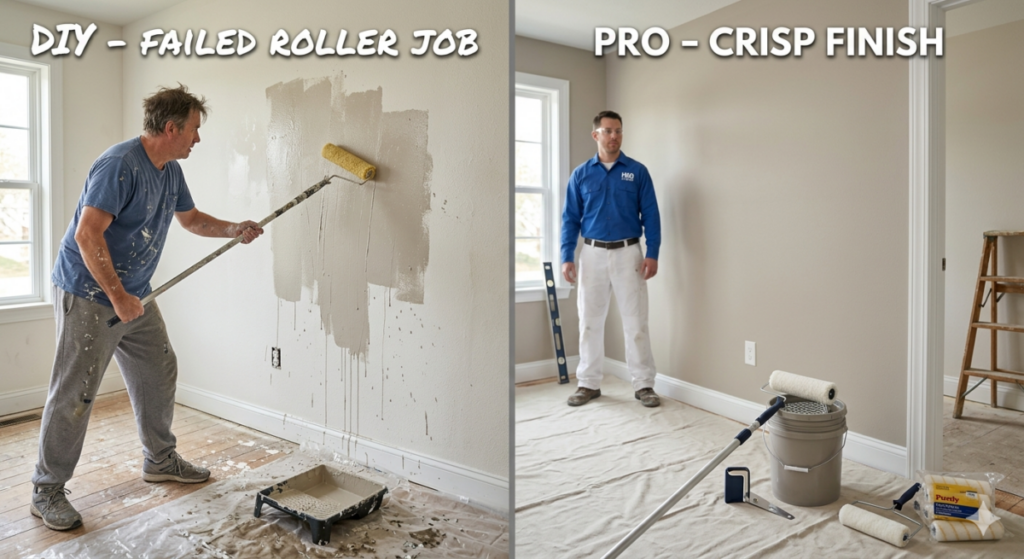
4. Renovating Before Selling: What It Really Involves
If you choose to renovate, you are essentially becoming a temporary house flipper. You need to be cold-blooded about your choices. Do not pick the granite you like; pick the one the 30-year-old buyer with a tech job likes. In 2026, buyers are looking for “turn-key” properties because they are also too busy (or too unskilled) to swing a hammer.
Technical Deep Dive: 2026 Zoning and Regulatory Hurdles
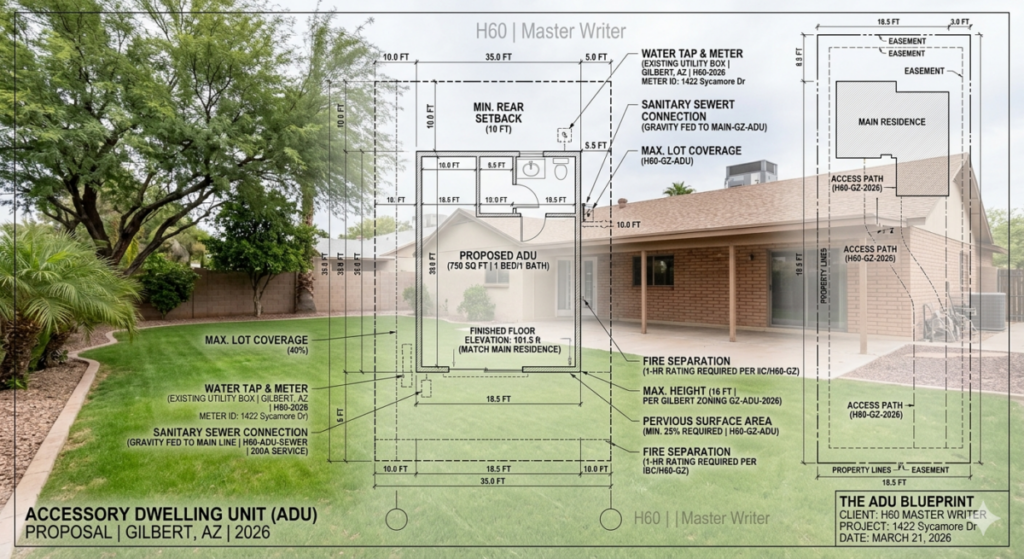
One major risk in 2026 is the “Permit Trap.” Many municipalities have updated their energy-efficiency requirements (often referred to as Green Building Codes). If you pull a permit for a simple bathroom remodel, the city inspector might require you to bring the entire floor’s electrical system up to 2026 code, or install specific low-flow plumbing fixtures that cost three times the standard rate. This is “Scope Creep” mandated by law. Before you start a renovation, you must check the local Accessory Dwelling Unit (ADU) laws. Sometimes, adding a small suite is a better ROI than fixing a kitchen, but the zoning variances required can take 6 to 9 months to process. If you are 75 years old, do you really want to spend a year of your life in zoning board meetings? Probably not. Furthermore, in 2026, wildfire and flood zone remapping has changed insurance requirements for “substantial improvements.” If your renovation costs exceed 50% of the home’s value, you may be forced to elevate the structure or install expensive mitigation systems that were never part of your original budget.
| Affiliate Product | Purpose | 2026 Price Est. |
|---|---|---|
| Laser Measure Pro X | Accurate floor plans for buyers. | $149 |
| SmartLeak Sensor Kit | Prevents flood damage during vacant periods. | $89 |
| Neutral-Palette Paint Fan | Choosing the right colors for 2026 buyers. | $25 |
5. The Truth: Which Renovations Actually Increase ROI
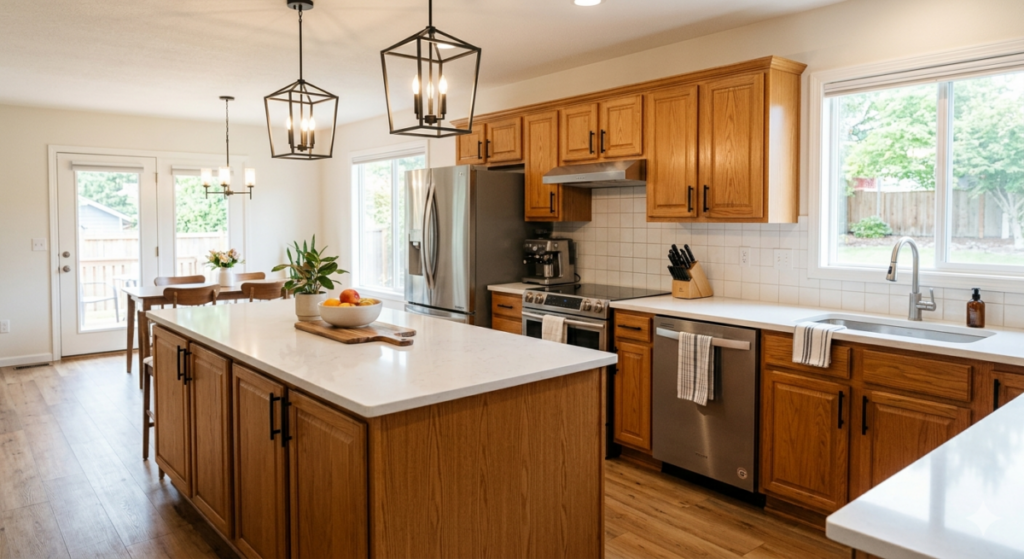
Most people think a new kitchen is the key to wealth. It’s not. It’s the key to a contractor’s new boat. The highest ROI always comes from the boring stuff. Fresh paint, clean floors, and a front yard that doesn’t look like a set from a horror movie. In my 100+ flips, I’ve found that cleanliness is worth more than marble.
- Prioritize “Safety and Soundness” items like fixing trip hazards on the porch.
- Update old, yellowed light switches and outlets to clean white Decora styles.
- Replace old, mismatched cabinet handles with modern matte black or brushed gold hardware.
- Steam clean all carpets or replace them with cheap, durable Luxury Vinyl Plank (LVP).
Technical Deep Dive: Structural Engineering and Hidden Liabilities
When you start a renovation, you open “Pandora’s Box.” In older homes, removing a wall to create an “open concept” (which is still popular in 2026) requires a structural engineer’s seal. If you find termite damage or dry rot during this process, you are legally required to fix it before selling, or disclose it and take a massive price hit. According to 2026 labor data, specialized structural labor is billed at $150 per hour. If you sell as-is, that structural liability is baked into the discounted price. If you renovate, you own that liability until the day of closing. I’ve seen $10,000 “cosmetic” flips turn into $40,000 “structural” nightmares because someone wanted to move a fridge six inches to the left. Furthermore, modern 2026 seismic retrofitting codes in certain states mean that once you touch the framing, you might be forced to anchor the house to the foundation, a cost that rarely translates into a higher sale price but is mandatory for a Certificate of Occupancy.

6. The Hidden Costs Seniors Often Overlook
Time is money, but for seniors, time is also time. If a renovation takes six months, that is six months of paying property taxes, heating a house you don’t want to live in, and paying for “Builder’s Risk” insurance, which is significantly more expensive than standard homeowner’s insurance. Also, if you have already moved into assisted living, the home is sitting vacant. Vacant homes have a funny habit of attracting burst pipes and curious raccoons.
| 2026 Cost Transparency | Material Cost | Labor Cost |
|---|---|---|
| New Roof (Shingle) | $4,500 – $7,000 | $8,000 – $12,000 |
| HVAC Replacement | $3,200 – $5,000 | $2,500 – $4,000 |
| Water Heater | $600 – $1,100 | $800 – $1,500 |
7. A Simple Decision Framework (Step-by-Step)
Don’t let emotions drive the bus. Use this logic to decide if you should swing a hammer or sign a contract.
- Call three local real estate agents and ask for a “BPO” (Broker Price Opinion) for the home’s current as-is state.
- Ask those same agents for the “ARV” (After Repair Value) if the home was fully modernized.
- Get written quotes from licensed contractors for those specific repairs.
- Subtract the repair costs and a 10% “buffer” for surprises from the ARV.
- If the remaining number is not at least $25,000 higher than the as-is price, sell as-is.
Technical Deep Dive: IRC Section 121 and Capital Gains
The IRS gives you a break on the sale of your primary residence; up to $250,000 for individuals and $500,000 for married couples is tax-free. However, if your home has appreciated massively since you bought it in 1985, you might be hovering near that limit. Renovations are “Capital Improvements” that increase your cost basis. For example, if you bought the house for $100,000 and spent $50,000 on a kitchen, your basis is now $150,000. This could potentially save you thousands in capital gains taxes if the sale price is very high. In 2026, with the sunsetting of certain tax provisions, managing your basis is a critical component of ROI that most “average” agents won’t tell you about. Always consult a CPA to see if the renovation “cost” actually saves you “tax” money. If you are in a high-tax state like California or New York, the state-level capital gains can eat another 9-13% of your profit, making the basis adjustment even more vital. Don’t renovate just for beauty; renovate for the tax shield if the numbers justify it.

8. Real-Life Example (Simple Numbers)
Let’s look at the “Smith” family. They have a ranch-style home worth $300,000 today. It needs $40,000 in work. If they do the work, they could sell it for $350,000. On the surface, that looks like a $10,000 win! But wait. The renovation took 4 months. In those 4 months, they paid $4,000 in taxes and utilities. They paid $2,000 in interest on the loan they took for the repairs. They also had to pay a higher commission because the sale price was higher. In the end, they netted about $2,000 more than if they had just sold it as-is on day one. They spent four months of their lives for $2,000. That is $500 a month for full-time stress. No thank you. I’ve seen seniors lose their minds over less; it’s simply bad business.
9. Special Considerations for Seniors
As we age, our tolerance for “chaos” decreases. Having workers in your home, breathing in drywall dust, and not having a working kitchen for a month is a health hazard. Furthermore, if you are planning to use the proceeds for a senior living community, many of those facilities have a “buy-in” price that changes annually. If you wait 6 months to renovate, the cost of your next home might go up more than the profit you made on the renovation. Efficiency is usually better than perfection.
Technical Deep Dive: The 10-Year Net Worth Trajectory
If you take $50,000 and put it into a renovation, you are betting on a short-term spike. If you take that $50,000 and invest it in a diversified portfolio while selling the house as-is, the compounding interest over the next 10 years of your retirement often outperforms the one-time real estate gain. Using 2026 actuarial tables, a 70-year-old has a significant “horizon” where liquidity (cash in hand) is more valuable than illiquid home equity. If you need a nurse or a home health aide in three years, you can’t pay them with a fancy marble countertop. You need the cash you got from the quick as-is sale. Additionally, in 2026, Medicaid Look-Back periods are still a major concern. Moving cash into a primary residence via renovation might protect it from certain asset tests, but it also locks it away. A strategic first-principles analysis must weigh the safety of the asset versus the accessibility of the funds for long-term care needs.
| Decision Factor | Selling As-Is | Renovating |
|---|---|---|
| Stress Level | Low | High |
| Time to Cash | 14-30 Days | 90-180 Days |
| Risk of Loss | Minimal | Moderate |
10. When Selling “As-Is” Is the Smarter Move
If your roof is leaking, the basement is wet, and the electrical panel is a fire hazard, sell as-is. These are “big ticket” items that scare retail buyers but don’t scare professional investors who have crews on speed dial. You will never get a dollar-for-dollar return on a new roof. It’s an “expectation” of the buyer, not an “upgrade.”
- The home is located in a high-demand area where builders are looking for “tear-downs.”
- The owner has health issues that make living in a construction zone dangerous.
- The estimated repairs exceed 15% of the current home value.
- You need to relocate immediately for a life transition or family emergency.
11. When Renovating Makes Sense
Renovating makes sense only when the work is “Cosmetic” and “High-Impact.” If your house is structurally perfect but looks like a time capsule from 1982, a few thousand dollars can unlock $30,000 in value. This is the “Goldilocks Zone” of real estate.
- The home is the “ugliest” house in a very nice neighborhood.
- The repairs are purely surface-level (paint, carpet, lighting).
- You have a trusted family member or contractor who can manage the work for you.
- You are not living in the home while the work is being done.
Technical Deep Dive: 2026 Labor Market Realities
In 2026, we are seeing a “Skilled Trade Deficit.” The cost of a master plumber or electrician has skyrocketed because there are fewer people entering the trades. This means that “small jobs” often get hit with a “minimum service fee” of $300-$500 just for the truck to show up. If you are doing a renovation, you must bundle your tasks. Hiring a handyman to fix one door is a waste of money. Hiring a handyman for three days to fix twenty items is an efficient use of capital. If you cannot find a contractor who will commit to a “fixed-price contract” in 2026, do not start the project. “Time and Materials” contracts are a black hole for senior savings. Additionally, the 2026 supply chain for specialized components—like smart-home panels or high-efficiency heat pumps—remains volatile. A three-week delay in a circuit breaker delivery can derail your entire market entry timing, turning a spring sale into a winter slog.
12. Hybrid Option: The “Minimal Prep” Strategy
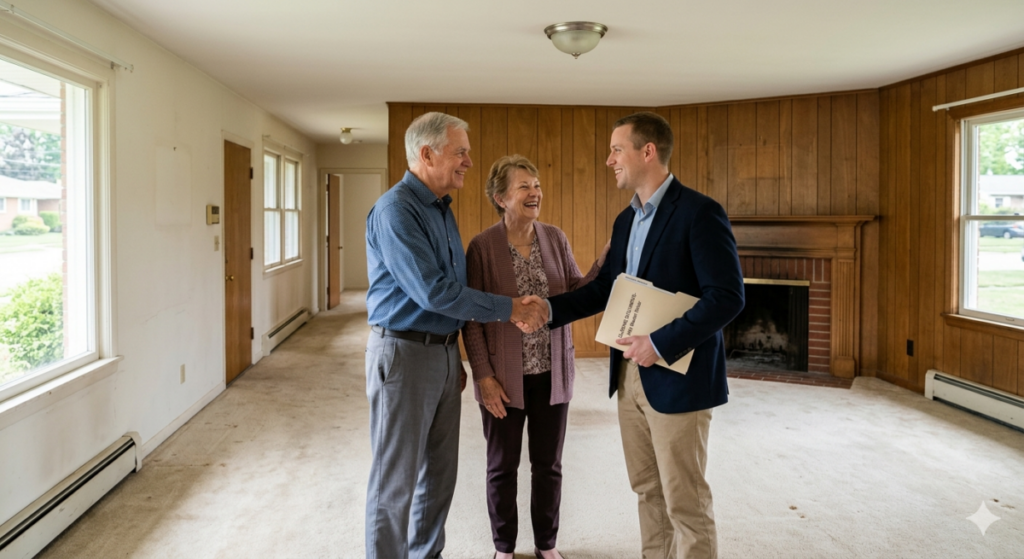
This is my favorite strategy. You don’t remodel the kitchen, but you do deep clean the oven. You don’t replace the windows, but you do wash them. You focus on the “Five Senses.” Does the house look bright? Does it smell fresh? Is it quiet? This costs almost nothing but provides the best ROI because it removes the “ick factor” that makes buyers lowball you.
- Rent a 20-yard dumpster and throw away everything you haven’t touched in five years.
- Hire a professional cleaning crew for a “top-to-bottom” scrub, including baseboards and ceiling fans.
- Replace every burnt-out lightbulb with “Daylight” LED bulbs to make the rooms look larger.
- Refresh the mulch in the front garden beds and trim back any bushes touching the house.
13. Common Mistakes to Avoid
The biggest mistake? Over-improving. I once saw a homeowner put $80,000 into a basement finish in a neighborhood where no one had finished basements. They got $0 back. Another mistake is trusting a “friend” who does construction on the side. In 2026, you need licenses, insurance, and permits. If your friend falls off a ladder in your kitchen, your “profit” just became a lawsuit. Also, don’t ignore the power of staging. Empty houses look small and cold. You don’t need a full furniture set, but a few well-placed items can help a buyer imagine their own life in the space without you spending a dime on structural changes.
14. Final Takeaway: What Actually Increases ROI
ROI is not just about the check you get at the end. It’s about the life you live during the process. In 2026, the highest net return for most seniors comes from a “clean and lean” approach. Fix the safety issues, scrub the floors, and price it fairly. The market will do the rest. If you try to out-smart the market with a massive renovation, the market usually wins, and you end up tired and frustrated. Remember, a buyer isn’t just buying your house; they are buying peace of mind. If you provide a clean, honest, but un-renovated home, many buyers will see it as a blank canvas they can make their own.
15. Simple Closing Guidance
If you’re still undecided, ask yourself: “Do I want to be a construction manager or a retiree?” If the numbers don’t show a clear, guaranteed $30,000+ profit after all expenses and taxes, take the easy path. Sell it as-is or do the bare minimum. You’ve worked hard for your home equity; don’t give it all to a contractor in 2026. Keep your eyes on the bottom line and your feet on the golf course.
Internal Resources:
* 2026 Reverse Mortgage vs. Downsizing: The 10-Year Equity Drain Math They Don’t Show You
* Risk Warning 2026: Why Most Homeowner Contractor Lawsuits Fail (Cost Tables Inside)
* 2026 Contractor Fraud Risks: Labor Price Tables and Vetting Logic
About the Author: Charles O’Dell
Prior to his real estate career, Charles was a practicing CPA and financial planner with American Express. Now, with 23+ years of experience and over 100 successful property flips, Charles is a leading expert in senior housing transitions. He specializes in stripping away the marketing “fluff” to help homeowners find sustainable, logical real estate solutions that protect their net worth in retirement.
Backed by 23+ years of real estate experience and over 100 successful property flips by Charles O’Dell.